
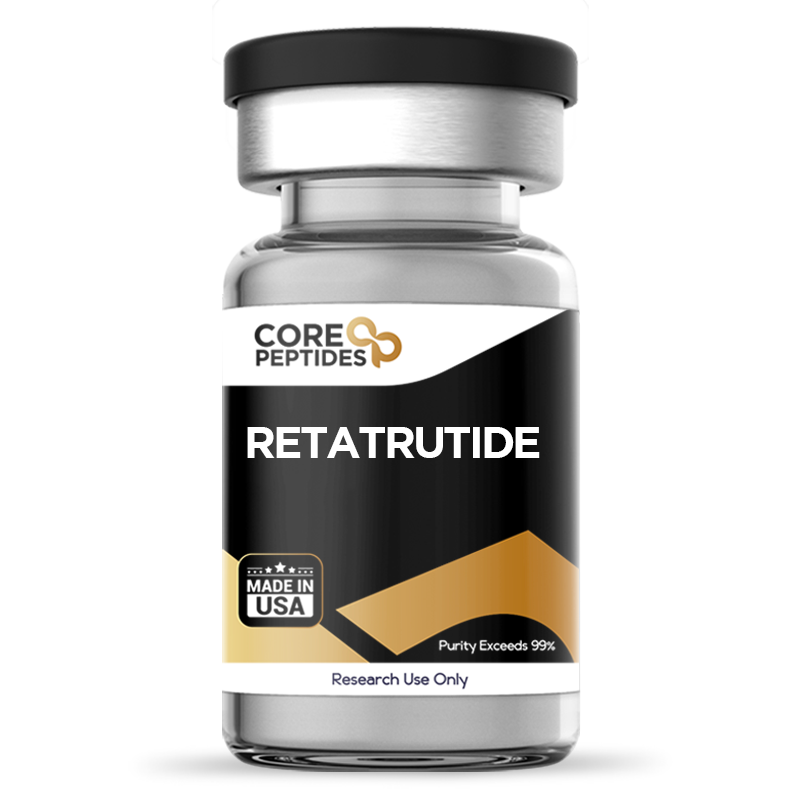
Retatrutide (8mg/16mg) Research Peptide
Retatrutide (8mg/16mg) is one of the most advanced metabolic research peptides currently available. Classified as a next-generation triple-agonist compound, Retatrutide has gained rapid attention in scientific and metabolic research communities due to its unique mechanism of action and emerging clinical data.
At Core Peptide, Retatrutide (8mg/16mg) is offered strictly for laboratory and research use only, supporting qualified researchers across the United States who are exploring metabolic regulation, energy balance, and appetite-related signaling pathways.
What Is Retatrutide?
Retatrutide peptide is a synthetic research compound engineered to activate three key metabolic receptors simultaneously, setting it apart from earlier single- or dual-pathway peptides.
The three primary targets studied include:
-
GLP-1 (Glucagon-Like Peptide-1) receptor
-
GIP (Glucose-Dependent Insulinotropic Polypeptide) receptor
-
Glucagon receptor
This triple-agonist activity is what distinguishes Retatrutide (8mg/16mg) from traditional GLP-1–based research compounds. By engaging multiple metabolic pathways at once, Retatrutide is being studied for its broader influence on energy expenditure, appetite signaling, glucose metabolism, and fat utilization.
External research reference:
https://pubmed.ncbi.nlm.nih.gov
Why Retatrutide Is Considered a Next-Generation Peptide
Earlier metabolic peptides typically targeted a single pathway, such as GLP-1 alone. Retatrutide expands upon this by simultaneously activating GLP-1, GIP, and glucagon receptors, which may result in a more comprehensive metabolic response in controlled research models.
Researchers are particularly interested in Retatrutide due to its potential to influence:
-
Central appetite signaling pathways
-
Peripheral energy expenditure mechanisms
-
Lipid and fat metabolism signaling
-
Glucose homeostasis research models
Because of this multi-pathway engagement, Retatrutide (8mg/16mg) is often categorized as a core metabolic research peptide in obesity and metabolic disorder research.
Retatrutide (8mg/16mg) and Metabolic Research
Preclinical and early clinical investigations suggest that triple-agonist peptides like Retatrutide may offer enhanced metabolic outcomes when compared to single-receptor compounds. Studies presented through organizations such as the National Institutes of Health (NIH) highlight increased interest in compounds that influence both appetite control and energy output rather than appetite suppression alone.
By activating the glucagon receptor alongside GLP-1 and GIP, Retatrutide is being explored for its ability to promote fat oxidation and increased caloric expenditure in research environments.
Authoritative source:
https://clinicaltrials.gov
Appetite and Energy Balance Signaling
One of the primary research focuses of Retatrutide peptide is its potential impact on appetite regulation and satiety signaling. GLP-1 and GIP receptors are well known for their roles in gastrointestinal hormone signaling, while glucagon is associated with energy mobilization.
When studied together, this receptor combination may help researchers better understand:
-
Central nervous system appetite signaling
-
Hormonal feedback mechanisms
-
Energy intake versus expenditure balance
This makes Retatrutide (8mg/16mg) a valuable research tool for metabolic and endocrinology studies.
Retatrutide Dosage & Dosing Considerations (Research Overview)
When discussing Retatrutide dosage or Retatrutide dosing, it is essential to clarify that:
-
Retatrutide is for research purposes only
-
It is not FDA-approved
-
It is not intended for human or veterinary consumption
The 8mg and 16mg formats are supplied to accommodate a variety of experimental designs and laboratory protocols. Researchers determine concentration, dilution, and application strictly according to approved research methodologies and institutional guidelines.
For compliance and safety, always review Core Peptide’s
👉 Terms & Conditions at https://corepeptide.us
Why Retatrutide (8mg/16mg) Is in High Demand
Interest in Retatrutide (8mg/16mg) has grown rapidly due to early-stage clinical findings indicating greater metabolic impact compared to traditional GLP-1–based compounds. Researchers continue to investigate how triple-agonist signaling may outperform single-pathway approaches in metabolic research models.
Key factors driving demand include:
-
Novel triple-receptor activation
-
Broad metabolic research applications
-
Growing volume of peer-reviewed data
-
Interest from obesity and endocrinology researchers
As a result, Retatrutide is now one of the most searched and discussed peptides in modern metabolic research markets.
Quality & Research Standards at Core Peptide
At Core Peptide USA, all research peptides are supplied with a focus on:
-
High purity and consistency
-
Transparent labeling and specifications
-
Secure U.S.-based fulfillment
-
Research-only compliance
Retatrutide (8mg/16mg) from Core Peptide is intended exclusively for qualified laboratories and professionals conducting legitimate scientific research.
Be the first to review “Retatrutide (8mg/16mg)”
Related products
Peptides for sale
Peptides for sale
Peptides for sale
Peptides for sale
Peptides for sale
Peptides for sale
Peptides for sale
Peptides for sale
Reviews
There are no reviews yet.