
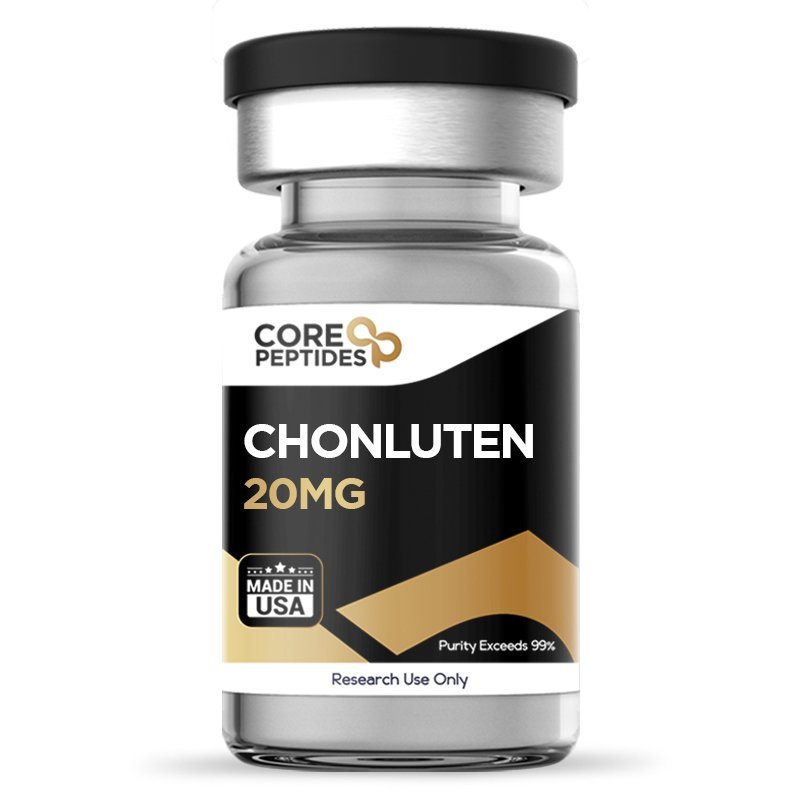
Chonluten (20mg) Peptide – Research-Grade EDG Tripeptide in the United States
Chonluten (20mg) is a synthetic research peptide widely studied for its potential regulatory role in the respiratory system, immune signaling, inflammation, and gene expression. Also known as the EDG tripeptide or T-34, Chonluten belongs to a class of short peptides frequently referred to as Khavinson peptides, which are researched for their organ-specific and bioregulatory properties.
At Core Peptide, we supply Chonluten (20mg) exclusively for laboratory and scientific research purposes, supporting researchers, universities, and institutions throughout the United States. Learn more about our research peptide standards at:
👉 https://corepeptide.us
What Is Chonluten Peptide?
Chonluten peptide is a tripeptide complex composed of glycine, glutamine, and asparagine. It has been investigated for its potential to regulate physiological processes by influencing inflammation, cellular proliferation, and tissue renewal.
Researchers suggest that Chonluten (20mg) may help restore balance between anabolic and catabolic processes, which are critical for maintaining functional tissues. Its organ-specific nature has made it a subject of interest primarily in lung and bronchial mucosa research, with secondary exploration in the gastrointestinal tract.
Unlike many larger peptides, Chonluten’s small molecular size allows it to be studied for potential interactions with cell nuclei and gene regulatory mechanisms, making it relevant in both immunological and epigenetic research models.
Chemical Profile of Chonluten (20mg)
-
Molecular Formula: C₁₁H₁₇N₃O₈
-
Molecular Weight: 319.27 g/mol
-
Structure: EDG (Glu-Asp-Gly) tripeptide
-
Other Names: Glutamyl-aspartyl-glycine, H-Glu-Asp-Gly-OH, T-34
This well-defined chemical composition supports reproducibility and consistency in controlled laboratory studies involving Chonluten peptide.
For compound reference data, see PubChem:
🔗 https://pubchem.ncbi.nlm.nih.gov/compound/Glutamyl-aspartyl-glycine
Chonluten (20mg) and Inflammation Research
One of the primary research areas involving Chonluten (20mg) focuses on its potential influence on inflammatory pathways, particularly within the respiratory system. As lung capacity declines due to aging or environmental stressors, inflammation of the bronchial lining may increase.
Research suggests Chonluten peptide may help reduce inflammatory signaling by modulating STAT pathways, especially STAT1 and STAT3, in immune cells such as macrophages. These signaling proteins act as molecular switches that regulate immune responses and gene transcription.
Chonluten has been associated in vitro with reduced production of inflammatory cytokines, including IL-6, TNF-α, and IL-17, which are widely recognized as mediators of inflammation. By influencing these markers, Chonluten peptide continues to be examined as a valuable tool in immune and inflammation research models.
For background on STAT signaling pathways, visit the NIH resource:
🔗 https://www.ncbi.nlm.nih.gov/pmc/articles/PMC5452158/
Chonluten Peptide and Respiratory Tissue Studies
Chonluten is considered organ-specific, with its most prominent research focus centered on lung and bronchial mucosa tissues. The bronchial lining acts as a protective barrier against environmental irritants, pathogens, and airborne toxins.
Studies propose that Chonluten (20mg) may influence how immune cells interact with endothelial cells lining blood vessels. This interaction may affect immune cell migration and adhesion, both of which are important factors in inflammatory regulation within respiratory tissues.
By potentially supporting cellular proliferation while limiting excessive apoptosis, Chonluten peptide has become an area of interest in respiratory tissue regeneration and airway biology research.
Gastrointestinal Tract Research Applications
Beyond respiratory research, Chonluten (20mg) has also been explored in gastrointestinal tissue models. Research suggests that its effects in the digestive tract may parallel those observed in lung tissues.
Chonluten peptide has been linked to the regulation of genes associated with antioxidant defense systems, including superoxide dismutase (SOD). By potentially normalizing antioxidant enzyme activity, Chonluten may help reduce oxidative stress in stomach and intestinal tissues.
Additionally, studies indicate that Chonluten may influence inflammatory genes such as TNF-α and COX-2, while promoting fibroblast and epithelial cell proliferation—both essential for tissue repair and regeneration in gastrointestinal research models.
Chonluten (20mg) and Gene Expression Research
Short peptides like Chonluten peptide have been widely researched for their potential role in epigenetic regulation, including DNA methylation and gene expression modulation.
Scientific literature suggests that small peptides may penetrate the cell nucleus and interact directly with DNA, histone proteins, and nucleosomes. These interactions may influence transcription, replication, and DNA repair mechanisms.
Chonluten (20mg) has been studied for its ability to regulate genes associated with inflammation, oxidative stress, and cellular survival, making it relevant in aging, immune, and molecular biology research.
For a comprehensive review of peptide-based gene regulation, see:
🔗 https://www.ncbi.nlm.nih.gov/pmc/articles/PMC8622604/
Chonluten Peptide and Immune System Research
Research indicates that Chonluten (20mg) may exert immunomodulatory effects by influencing key regulatory genes, including HSP70, c-Fos, SOD, and TNF-α. These genes play critical roles in immune balance, cellular stress response, and inflammation.
By modulating these pathways, Chonluten peptide has been explored as a research compound for understanding immune adaptation, tissue resilience, and inflammatory control—particularly under hypoxic or oxidative stress conditions.
Why Buy Chonluten (20mg) from Core Peptide?
CorePeptide.us is a trusted U.S. supplier of research-grade peptides, serving laboratories and researchers nationwide.
Why researchers choose Core Peptide:
-
USA-based distribution and fast shipping
-
High-purity, research-only peptides
-
Transparent labeling and quality control
-
Dedicated peptide research supplier
Explore our peptide catalog here:
👉 https://corepeptide.us/shop
Be the first to review “Chonluten (20mg)”
Related products
Peptides for sale
Peptides for sale
Peptides for sale
Peptides for sale
Peptides for sale
Peptides for sale
Peptides for sale
Peptides for sale
Reviews
There are no reviews yet.