
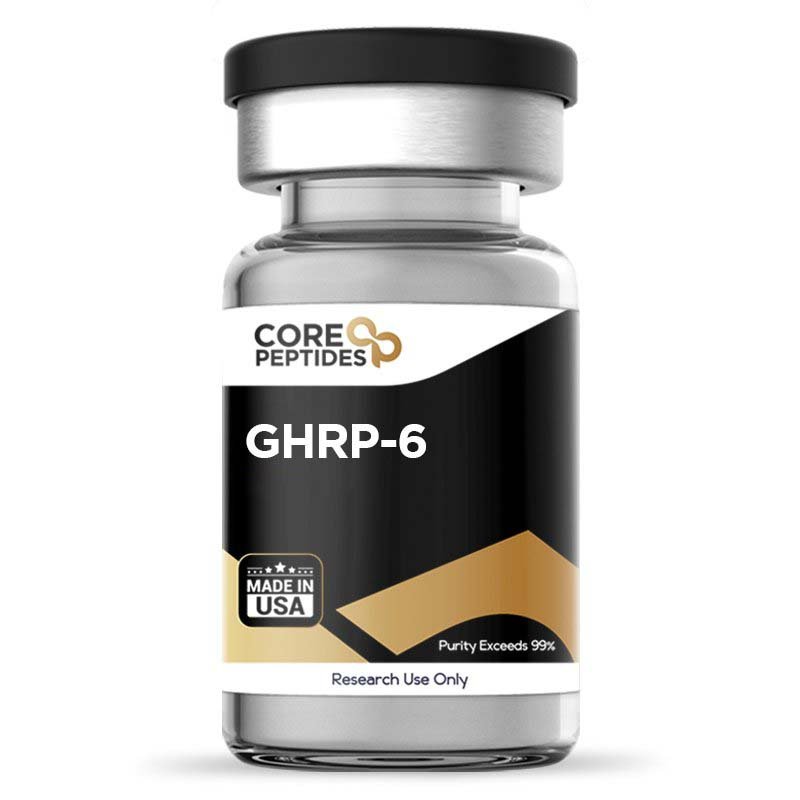
GHRP-6 (5mg / 10mg) Peptide for Research Use | Core Peptide USA
GHRP-6 (5mg / 10mg), short for Growth Hormone Releasing Peptide-6, is a synthetic hexapeptide extensively studied in laboratory and preclinical research for its potential role in growth hormone (GH) stimulation and interaction with ghrelin (GHS-R) receptors. At Core Peptide, we supply high-purity GHRP-6 peptides intended strictly for research and laboratory use within the United States.
As a trusted U.S.-based peptide supplier, Core Peptide ensures consistency, quality control, and secure domestic distribution for researchers working with GHRP-6 (5mg / 10mg).
👉 Explore related compounds in our catalog:
Internal Link: https://corepeptide.us/peptides
What Is GHRP-6?
GHRP-6 is a low–molecular weight synthetic peptide developed as part of a class of compounds known as growth hormone secretagogues (GHSs). Structurally, GHRP-6 is an analog of the endogenous opioid peptide met-enkephalin, though studies indicate it lacks classical opioid activity.
Instead, GHRP-6 appears to exert its primary effects through binding to growth hormone secretagogue receptors (GHS-R1a)—now recognized as ghrelin receptors. Ghrelin, often referred to as the “hunger hormone,” is naturally secreted by the stomach and plays a role in appetite regulation, metabolism, and endocrine signaling.
Chemical Profile of GHRP-6 (5mg / 10mg)
-
Molecular Formula: C₄₆H₅₆N₁₂O₆
-
Molecular Weight: 873.03 g/mol
-
Alternate Name: Growth Hormone Releasing Peptide-6
Core Peptide offers GHRP-6 in 5mg and 10mg vials, allowing flexibility for varying research protocols.
Mechanism of Action: How GHRP-6 Works
While the full mechanism of GHRP-6 remains under investigation, research suggests that it acts through multiple receptor pathways:
1. Ghrelin (GHS-R1a) Receptor Activation
By binding to GHS-R1a receptors located in the hypothalamus and pituitary gland, GHRP-6 may stimulate intracellular signaling cascades that lead to increased secretion of growth hormone. Unlike growth hormone–releasing hormone (GHRH), GHRP-6 may act as a functional antagonist of somatostatin, a hormone that inhibits GH release.
2. CD36 Receptor Interaction
Studies indicate that GHRP-6 may also bind to CD36 receptors, which are involved in lipid metabolism, inflammation, angiogenesis, and cellular survival pathways. This dual-receptor activity distinguishes GHRP-6 from traditional GHRH analogs and contributes to its broad research interest.
Dependence on Endogenous GHRH
Research evaluating the relationship between GHRP-6 and endogenous GHRH suggests that baseline GHRH presence may be required for optimal GH stimulation. In studies where GHRH antagonists were introduced, GH responses to GHRP-6 were diminished, supporting the hypothesis that GHRP-6 acts synergistically along the hypothalamic–pituitary axis.
GHRP-6 Peptide and Hypothyroidism Research
Hypothyroidism is commonly associated with reduced growth hormone secretion. In experimental models, GHRP-6—alone or in combination with GHRH—appeared to induce higher GH levels than GHRH alone. Researchers theorized this effect may result from GHRP-6’s potential ability to counteract somatostatin inhibition at the pituitary level.
Cortisol and Endocrine Axis Studies
In nighttime endocrine studies, GHRP-6 exposure was associated with increased secretion of growth hormone and cortisol (ACTH). These findings suggest that GHRP-6 may influence both hypothalamic and pituitary signaling, highlighting its utility as a research tool for understanding hormonal rhythms and endocrine regulation.
GHRP-6 and Organ Function Research
Preclinical studies have examined GHRP-6 in the context of organ injury and recovery. In animal models of multiple organ failure, GHRP-6 appeared to:
-
Enhance gut epithelial cell migration
-
Reduce hepatic and intestinal tissue damage
-
Decrease lipid peroxidation by up to 85%
Additional effects were observed when GHRP-6 was combined with epidermal growth factor (EGF), indicating possible synergistic research applications.
Gastrointestinal Transit and Metabolic Studies
Research involving diabetic mouse models demonstrated that diabetes reduced gastric emptying and intestinal transit. Upon exposure to GHRP-6, improvements in gastric emptying and intestinal transit were observed, suggesting a role for ghrelin receptor activation in GI motility research.
Neuroprotection and IGF-1 Pathways
GHRP-6 has been studied for its influence on the IGF-1 system in the brain. Experimental data showed increased IGF-1 mRNA expression in specific regions such as the hypothalamus and hippocampus. Associated activation of Akt and anti-apoptotic proteins (Bcl-2) suggests that GHRP-6 may initiate cell survival pathways in response to growth factor signaling.
External Reference:
NCBI – Ghrelin and Growth Hormone Secretagogues
https://www.ncbi.nlm.nih.gov/books/NBK279163/
GHRP-6 Peptide and Muscle Tissue Research
Cell culture studies involving myoblasts suggest that GHRP-6 may enhance the expression of myogenic markers, collagen type I, and IGF-1. These findings support continued interest in GHRP-6 for studying muscle development, repair, and anabolic signaling.
Comparative studies indicate that GHRP-6 may induce higher GH peaks than physiological GHRH stimulation, reinforcing its value as a potent research compound.
Tissue Recovery and Wound Healing Research
Through combined activation of ghrelin and CD36 receptors, GHRP-6 has been associated with reduced inflammation, improved wound healing, and diminished fibrotic responses in animal models. Studies report reductions in pro-inflammatory cytokines such as TNF-α, as well as decreased fibrotic markers including TGF-β and CTGF.
External Reference:
PubMed – GHRP-6 in Adenohypophysial Cells
https://pubmed.ncbi.nlm.nih.gov/10494658/
Why Choose Core Peptide for GHRP-6 (5mg / 10mg)?
Researchers across the United States choose Core Peptide for:
-
🇺🇸 U.S.-based fulfillment and fast domestic shipping
-
High-purity, research-grade peptides
-
Transparent documentation and compliance standards
-
Secure packaging and batch consistency
Review our policies before ordering:
Internal Link: https://corepeptide.us/terms-and-conditions
Be the first to review “GHRP-6 (5mg / 10mg)”
Related products
Peptides for sale
Peptides for sale
Peptides for sale
Peptides for sale
Peptides for sale
Peptides for sale
Peptides for sale
Peptides for sale
Reviews
There are no reviews yet.