
PTD-DBM (5mg) Peptide – Research Overview
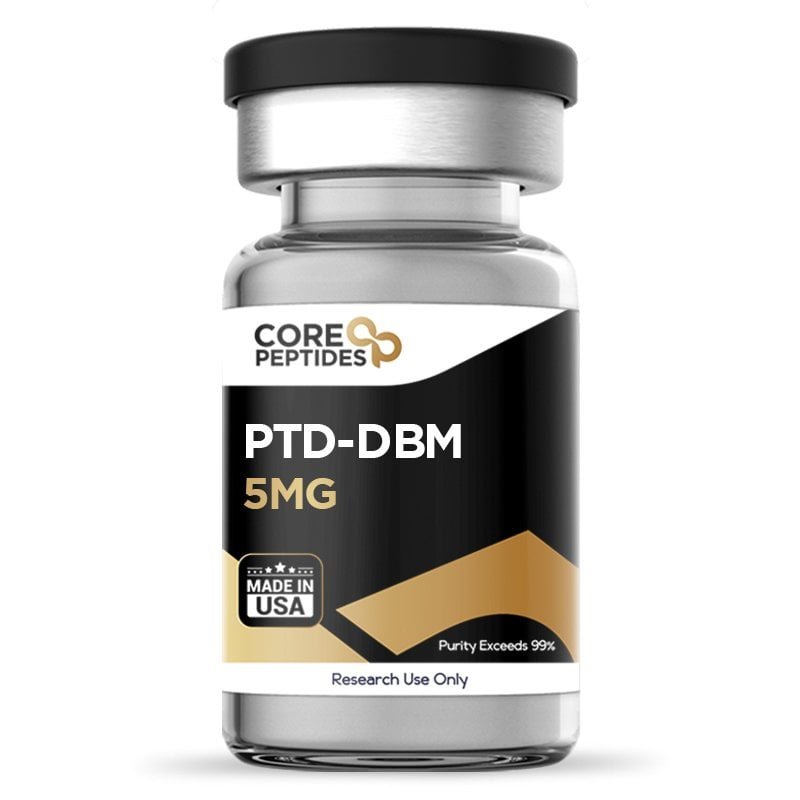
PTD-DBM (5mg)
PTD-DBM (5mg) is a specialized synthetic peptide developed for advanced cell signaling, regenerative biology, and hair follicle research. The peptide’s name—Protein Transduction Domain-fused Dishevelled Binding Motif—reflects its unique design, combining a cell-penetrating sequence (PTD) with a Dishevelled Binding Motif (DBM) that interacts with proteins in the Wnt/β-catenin signaling pathway.
At Core Peptide, we supply PTD-DBM (5mg) strictly for research and laboratory use only, supporting scientific investigation across the United States. This peptide has gained attention due to its hypothesized ability to disrupt inhibitory protein interactions and restore intracellular signaling linked to tissue regeneration and follicular activity.
Explore related research peptides at Core Peptide:
What Is PTD-DBM?
PTD-DBM peptide is engineered to penetrate cells and interact with intracellular signaling complexes. The PTD segment is a short amino acid sequence believed to facilitate cellular entry, while the DBM segment is designed to bind Dishevelled (Dvl) proteins—key regulators within the Wnt/β-catenin signaling cascade.
Researchers hypothesize that PTD-DBM disrupts the interaction between CXXC5, a known negative regulator, and Dishevelled (Dvl) proteins. This disruption appears to restore or enhance Wnt/β-catenin signaling, which plays a critical role in:
-
Hair follicle development
-
Stem cell activation
-
Tissue regeneration
-
Cell proliferation and differentiation
Because Wnt/β-catenin signaling is fundamental to embryonic development and adult tissue maintenance, PTD-DBM (5mg) has become a valuable tool in experimental research models.
Chemical Makeup of PTD-DBM (5mg)
-
Molecular Formula: C₁₂₄H₂₂₃N₆₁O₂₈S₂
-
Molecular Weight: 3080.7 g/mol
-
Other Names:
-
Protein Transduction Domain-fused Dishevelled Binding Motif peptide
-
Hair growth research peptide
-
These physicochemical properties reflect the peptide’s complexity and its suitability for advanced molecular and cellular studies.
PTD-DBM and the Wnt/β-Catenin Signaling Pathway
The Wnt/β-catenin pathway is a highly conserved cellular signaling network responsible for regulating cell fate, migration, and regeneration. When functioning normally, this pathway supports hair follicle cycling, bone formation, and wound repair.
Role of CXXC5 and Dishevelled (Dvl)
Research indicates that CXXC5 inhibits Wnt signaling by binding to Dishevelled proteins. This binding suppresses β-catenin activity and may halt regenerative processes. Elevated CXXC5 expression has been associated with:
-
Hair follicle regression
-
Entry into the catagen (regression) phase
-
Reduced regenerative signaling
PTD-DBM peptide is hypothesized to bind to the PDZ domain of Dvl, preventing CXXC5 from exerting its inhibitory effects. This may restore β-catenin signaling and reactivate regenerative cellular programs.
For an overview of Wnt/β-catenin biology, see:
https://www.ncbi.nlm.nih.gov/pmc/articles/PMC2846728/
PTD-DBM (5mg) and Hair Follicle Research
One of the most extensively studied applications of PTD-DBM peptide is its role in hair follicle biology. In murine models, exposure to PTD-DBM appeared to:
-
Promote entry into the anagen (growth) phase
-
Increase β-catenin expression
-
Elevate markers such as ALP and PCNA, which are associated with cell proliferation
Researchers also observed synergistic effects when PTD-DBM was used alongside Wnt3a or valproic acid (VPA)—both known activators of the Wnt pathway. This combination appeared to further amplify signaling activity and follicular responses.
A pivotal study published in the Journal of Investigative Dermatology explored these mechanisms in detail:
https://pubmed.ncbi.nlm.nih.gov/28595998/
PTD-DBM and Hair Loss–Related Pathways
Research has suggested that Prostaglandin D2 (PGD2) and dihydrotestosterone (DHT) may contribute to hair loss by increasing CXXC5 expression. Elevated CXXC5 then suppresses Wnt/β-catenin signaling, potentially leading to follicular miniaturization.
In contrast, PTD-DBM appears to counteract this suppression by inhibiting the CXXC5–Dvl interaction. Experimental models showed that either genetic deletion of CXXC5 or exposure to PTD-DBM restored Wnt signaling and supported follicle activity, highlighting PTD-DBM’s value in mechanistic hair research.
PTD-DBM and Bone Regeneration Research
Beyond hair biology, PTD-DBM (5mg) has been investigated in bone regeneration models. In murine studies spanning several weeks, researchers observed:
-
Increased bone formation
-
No adverse histological abnormalities
-
Recovery of bone loss in postmenopausal model mice
These findings suggest that targeting Dvl–CXXC5 interactions may support osteogenic signaling through Wnt/β-catenin activation. Scientists have proposed that peptides like PTD-DBM could complement existing osteoporosis research pathways.
PTD-DBM and Tissue Repair Studies
PTD-DBM has also been explored in wound healing and tissue regeneration research. Studies hypothesized that by restoring Wnt signaling, PTD-DBM may:
-
Enhance fibroblast activity
-
Promote collagen deposition
-
Support reepithelialization
-
Activate stem cells involved in tissue repair
In comparative murine studies, combined exposure to PTD-DBM and valproic acid reportedly produced more pronounced regenerative responses than growth factors alone, suggesting synergistic potential in experimental wound models.
PTD-DBM (5mg) From Core Peptide
CorePeptide.us supplies PTD-DBM (5mg) with a focus on:
-
Research-grade quality
-
Secure, professional packaging
-
Reliable shipping within the United States
View available research peptides:
https://corepeptide.us
All products sold by Core Peptide are intended strictly for laboratory and research use only and are not for human or veterinary consumption.
Be the first to review “PTD-DBM (5mg)”
Related products
Peptides for sale

Peptides for sale
Peptides for sale
Peptides for sale

Peptides for sale

Peptides for sale

Peptides for sale
Peptides for sale
Reviews
There are no reviews yet.