
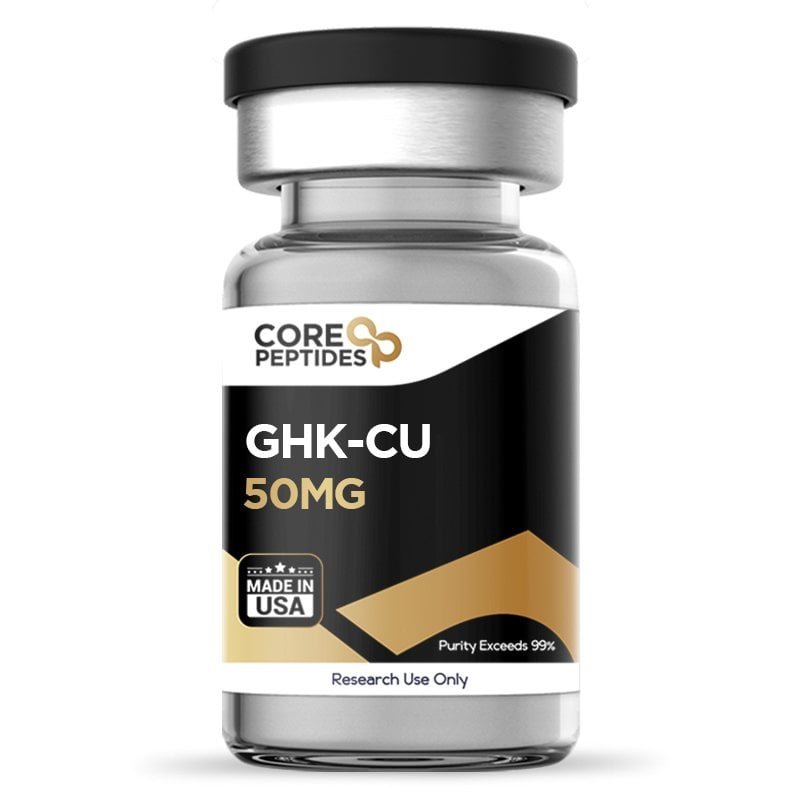
GHK-Cu (Copper) (50mg) Research Peptide
GHK-Cu (Copper) (50mg) is a naturally occurring copper-binding tripeptide widely studied in laboratory and preclinical research settings. This compound consists of the amino acid sequence glycyl-L-histidyl-L-lysine (GHK) complexed with a biologically active copper ion. Research indicates that GHK-Cu plays a significant role in cellular signaling, tissue remodeling, antioxidant defense, and gene expression modulation.
At Core Peptide USA, we supply GHK-Cu (Copper) (50mg) exclusively for research and laboratory use within the United States, ensuring high purity, consistency, and secure handling for qualified investigators.
What Is GHK-Cu (Copper)?
GHK-Cu is a naturally present peptide complex found in human plasma, saliva, and urine. Research suggests that it is released at sites of tissue injury, where it may assist in cellular communication and repair mechanisms. Notably, plasma concentrations of GHK-Cu decline with age—from approximately 200 ng/mL at age 20 to around 80 ng/mL by age 60—which has fueled scientific interest in its biological role.
Studies indicate that when GHK-Cu (Copper) is introduced to cell cultures in nanomolar concentrations, it may influence a wide range of cellular responses, from growth stimulation to differentiation. The copper ion appears to stabilize the peptide and enhance its biological activity by facilitating copper delivery into cells.
Specifications of GHK-Cu (Copper) (50mg)
-
Molecular Formula: C₁₄H₂₃CuN₆O₄
-
Molecular Weight: 340.38 g/mol
-
Other Names: Glycyl-L-histidyl-L-lysine-copper (II), Copper tripeptide-1
-
Format: Lyophilized powder
-
Quantity: 50mg
-
Use: Research and laboratory purposes only
For additional peptide options, visit our internal catalog:
👉 https://corepeptide.us/collections/peptides
Research Overview of GHK-Cu (Copper)
Gene Expression and Cellular Regulation
Scientific investigations suggest that GHK-Cu (Copper) may influence gene expression by modulating multiple biochemical pathways. Research proposes that the peptide complex may help “reset” gene expression patterns associated with damaged or aging cells. These findings have been explored in experimental models involving fibroblasts, epithelial cells, and other tissue types.
One study proposed that GHK-Cu may regulate genes associated with DNA repair, apoptosis, and antioxidant defense, suggesting a potential role in cellular homeostasis and resilience under stress conditions.
GHK-Cu (Copper) and Tissue Repair Research
Early studies from the 1980s identified GHK as an “emergency response molecule” released from the extracellular matrix following tissue injury. Once released, GHK binds copper ions present in plasma to form GHK-Cu, which may then stimulate:
-
Collagen synthesis
-
Decorin production
-
Accumulation of proteins and DNA at injury sites
Later studies suggested that GHK-Cu may also stimulate tissue inhibitors of metalloproteinases (TIMP-1 and TIMP-2), which are important regulators of extracellular matrix remodeling.
In comparative animal studies, wounds treated with GHK-Cu (Copper) demonstrated faster closure rates and improved tissue organization compared to placebo or zinc-based treatments.
Wound Healing and Regenerative Studies
Multiple animal and clinical research models have explored the potential of GHK-Cu in wound healing:
-
Rabbit wound models showed increased neovascularization and reduced neutrophil infiltration when exposed to GHK-Cu.
-
Laser-assisted healing studies suggested enhanced tissue granulation when GHK-Cu was combined with higher laser intensities.
-
Diabetic ulcer clinical studies reported significantly higher closure rates when GHK-Cu gel was used alongside standard wound care protocols.
These outcomes suggest that GHK-Cu (Copper) (50mg) remains a peptide of strong interest in regenerative research.
Antioxidant and Anti-Inflammatory Research
GHK-Cu has been widely studied for its potential antioxidative properties. Research suggests the peptide may:
-
Neutralize hydroxyl and peroxyl radicals
-
Reduce lipid peroxidation
-
Modulate ferritin-mediated iron release (up to 87% reduction in theoretical models)
In lung inflammation models, GHK-Cu exposure was associated with reduced inflammatory cytokines such as TNF-α and IL-1β, potentially through modulation of NF-κB and Nrf2 signaling pathways.
For additional biochemical reference data, see:
🔗 https://pubmed.ncbi.nlm.nih.gov/7453802/
🔗 https://www.ncbi.nlm.nih.gov/pmc/articles/PMC6073405/
Behavioral and Neurological Research Observations
Experimental animal studies have also explored the behavioral effects of GHK-Cu (Copper). In murine models, the peptide was associated with:
-
Reduced pain response in heat-based assays
-
Decreased anxiety-like behavior in maze studies
-
Lower aggression responses following stress induction
While these findings remain experimental, they contribute to the growing interest in GHK-Cu across multiple research domains.
Why Choose Core Peptide USA?
Core Peptide USA is committed to providing high-quality research peptides to laboratories across the United States. When purchasing GHK-Cu (Copper) (50mg) from corepeptide.us, you benefit from:
-
High-purity peptide standards
-
Secure U.S.-based shipping
-
Clear documentation and handling
-
Research-only compliance
Explore our peptide research resources here:
👉 https://corepeptide.us/pages/research-use
Be the first to review “GHK-Cu (Copper) (50mg)”
Related products
Peptides for sale
Peptides for sale
Peptides for sale
Peptides for sale
Peptides for sale
Peptides for sale
Peptides for sale
Peptides for sale
Reviews
There are no reviews yet.