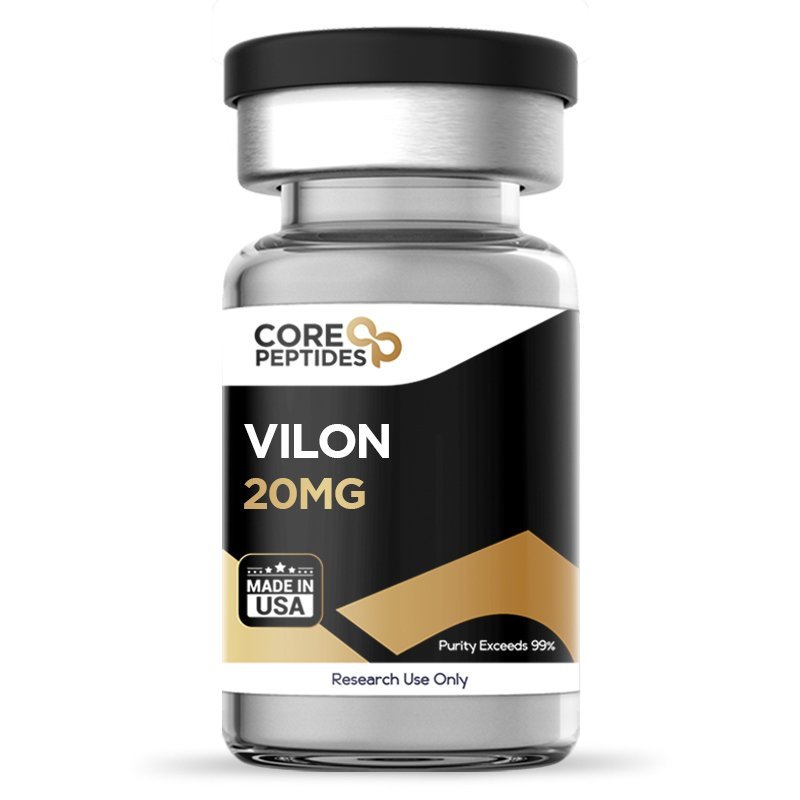
Vilon (20mg) – Advanced Bioregulator Peptide for Research
Vilon (20mg) Peptide
Vilon (20mg) is a synthetic bioregulator peptide extensively studied for its potential role in immune system modulation, cellular aging, and gene expression. Composed of just two amino acids, lysine and glutamic acid, Vilon is one of the shortest peptides suggested to exert broad biological influence at the cellular and genetic level.
At Core Peptide (https://corepeptide.us), Vilon (20mg) is supplied strictly for research and laboratory purposes only, supporting scientific exploration across immunology, gerontology, oncology, and cellular biology within the United States.
What Is Vilon Peptide?
Vilon is a dipeptide known chemically as Lysylglutamic Acid or Lysylglutamate. Despite its minimal structure, researchers classify Vilon as a bioregulator peptide, meaning it may influence cellular function by interacting with DNA and chromatin structures.
Unlike larger peptides that act through surface receptors, Vilon is believed to exert its potential effects by interacting directly with chromatin, possibly influencing gene activation and cellular signaling at the nuclear level.
Chemical Makeup of Vilon (20mg)
-
Molecular Formula: C₁₁H₂₁N₃O₅
-
Molecular Weight: 257.30 g/mol
-
Peptide Type: Dipeptide
-
Other Known Names:
-
Lysylglutamate
-
Lysylglutamic Acid
-
Normophthal
-
This compact structure allows researchers to study Vilon’s biological activity with high reproducibility in controlled environments.
Proposed Mechanisms of Action
Chromatin Interaction and Gene Reactivation
Research suggests that Vilon may interact with chromatin by:
-
Unrolling condensed chromatin structures
-
Activating ribosomal genes
-
Releasing previously “silent” genes
-
Supporting cellular synthetic processes
Through these mechanisms, Vilon may influence cellular repair, regeneration, and immune signaling without decondensing chromatin near the centromere, preserving genomic stability.
Vilon Peptide and Immune System Research
Immunomodulatory Properties
Vilon has been studied for its potential role in immune regulation, particularly in immunocompromised animal models. Researchers suggest that Vilon may stimulate interleukin-2 (IL-2) mRNA synthesis in spleen cells, a critical factor in maintaining immune balance.
A 2002 study comparing bioregulator peptides found that Vilon and Epithalon were the most potent stimulators of IL-2 mRNA synthesis, outperforming Cortagen in spleen cell cultures.
Thymus and T-Cell Development
Further studies propose that Vilon may interact with the thymus gland, potentially influencing T-cell maturation. Research indicates:
-
Up to 78% increase in CD5 expression in rat thymic cells
-
Approximately 45% increase in embryonic thymic cells
CD5 is a crucial marker in the development of CD4+ T-helper cells, which are essential for adaptive immune responses. These findings position Vilon peptide research as highly relevant to immunology and autoimmune research fields.
Vilon Peptide and Cellular Aging Research
Lifespan and Cellular Stability
Research involving murine models suggests that Vilon may:
-
Extend average lifespan under laboratory conditions
-
Enhance immune resilience
-
Support physical endurance and cellular energy
Importantly, researchers hypothesize that Vilon may act primarily on inactive or “silent” cells, rather than reversing apoptosis, making it particularly interesting in early-stage aging research.
Age-Dependent Tissue Effects
Studies involving spleen tissue explants from murine models of varying ages found that Vilon’s effects were more pronounced in older tissues. These findings suggest potential relevance for geriatric and age-related cellular stability research.
Additional investigations demonstrated that Vilon may partially inhibit radiation-induced cellular aging in immune organs such as the thymus and spleen, highlighting its potential protective role in radiation exposure models.
Vilon Peptide and Carcinogenic Cell Research
Several studies suggest that Vilon may influence carcinogenesis by:
-
Reducing tumor incidence
-
Delaying malignization
-
Lowering tumor aggressiveness
In urinary bladder carcinogenesis models, Vilon-exposed subjects showed:
-
56% cancer incidence vs 75.5% in controls
-
Fewer tumors per subject
-
Reduced severity of preneoplastic changes
However, researchers note that results may vary depending on experimental conditions. One study reported negative interactions when Vilon was combined with platinum-based chemotherapeutics, emphasizing the importance of controlled research design.
Gastrointestinal and Metabolic Research
Vilon peptide research also suggests potential effects on gastrointestinal and metabolic processes, including:
-
Enhanced enzyme activity in the GI tract
-
Improved glucose accumulation and glycine absorption
-
Possible reduction of intestinal permeability
These findings support ongoing exploration of Vilon’s influence on digestive and metabolic systems in laboratory models.
Gene Expression and Cardiovascular Research
Research indicates that Vilon may alter the expression of 36 genes in cardiac tissue, suggesting a possible role in hemodynamic and cardiovascular cellular regulation. While Epitalon exhibited broader gene expression changes, Vilon’s targeted activity remains of interest for focused genetic studies.
Quality Assurance at Core Peptide
At Core Peptide, we are committed to supplying high-purity, research-grade peptides, including Vilon (20mg), to support scientific accuracy and consistency.
Explore Related Research Peptides:
https://corepeptide.us/collections/all
External Scientific Resources:
https://pubmed.ncbi.nlm.nih.gov
https://www.ncbi.nlm.nih.gov
https://pubchem.ncbi.nlm.nih.gov
Buy Vilon (20mg) Peptide in the USA
For researchers seeking a reliable domestic source, Core Peptide provides Vilon (20mg) with professional handling, transparent documentation, and fast U.S. shipping.
Order Vilon (20mg) Today:
https://corepeptide.us
Reference
National Center for Biotechnology Information. PubChem Compound Summary for CID 7010502, Lysylglutamic Acid


Reviews
There are no reviews yet.