
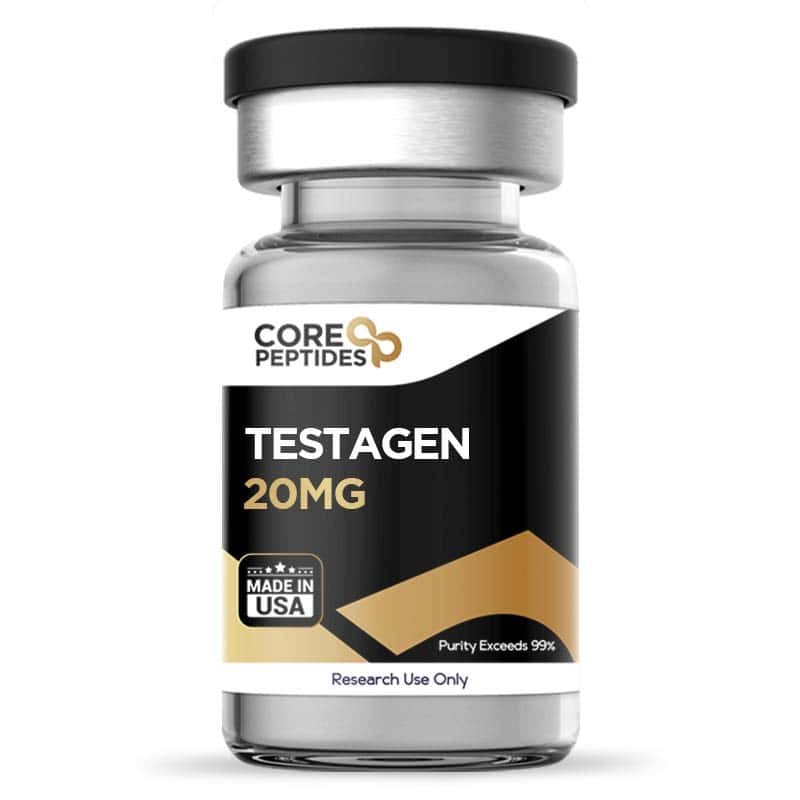

Testagen (20mg) Peptide – Research-Grade Bioregulatory Peptide
Testagen (20mg), also known as KEDG, is a short signaling peptide classified within the family of Khavinson peptides. These peptides are widely researched for their potential role as bioregulators, meaning they may influence cellular activity by interacting directly with DNA and nuclear structures. At Core Peptide, we provide high-purity Testagen (20mg) strictly for research and laboratory use to support ongoing scientific exploration in endocrine and cellular signaling pathways.
Testagen peptide is synthesized based on the amino acid composition found in extracts of the anterior pituitary gland, positioning it as a compound of interest in studies related to hormonal regulation, gene expression, and age-associated endocrine changes.
Learn more about our quality standards on our internal page:
https://corepeptide.us/pages/quality-assurance
What Is Testagen Peptide?
Testagen peptide is a tetrapeptide composed of four amino acids:
-
Lysine (Lys)
-
Glutamic Acid (Glu)
-
Aspartic Acid (Asp)
-
Glycine (Gly)
These amino acids form the peptide sequence Lys-Glu-Asp-Gly (KEDG). Due to its short chain length, Testagen belongs to a category of peptides that may cross cell membranes and nuclear membranes, allowing for direct interaction with chromatin and DNA in target tissues.
Chemical Makeup of Testagen (20mg)
-
Molecular Formula: C₁₇H₂₉N₅O₉
-
Molecular Weight: 447.2 g/mol
-
Sequence: Lys-Glu-Asp-Gly
-
Other Names: KEDG, Anterior Pituitary Peptide (APP)
-
Reconstitution: Required
Each vial of Testagen (20mg) from Core Peptide is manufactured under controlled conditions to ensure consistency, purity, and reproducibility for laboratory research.
Testagen and the Hypothalamic-Pituitary-Gonadal (HPG) Axis
One of the most researched areas involving Testagen peptide is its potential interaction with the hypothalamic-pituitary-gonadal (HPG) axis. This axis plays a central role in regulating testosterone synthesis and reproductive hormone balance.
Research models have suggested that Testagen may interact with pituitary cells, potentially influencing signaling pathways involved in testosterone production. In experimental settings associated with chronic inflammation and reduced testosterone levels, Testagen has been observed to correlate with:
-
Apparent increases in total testosterone levels
-
Potential improvements in uroflowmetry indicators
-
Reduction of inflammatory markers in prostate tissue
Researchers involved in these studies noted an apparent decrease in prostate inflammation alongside increased testosterone levels, highlighting Testagen’s relevance in endocrine research environments.
Epigenetic and Histone Interaction Research
Beyond endocrine signaling, Testagen (20mg) has attracted attention for its potential role in epigenetic regulation. Short peptides like Testagen have been shown in research environments to interact with histones, the protein structures responsible for organizing DNA into chromatin.
Studies indicate that Testagen may bind to specific histone regions through spatial conformation rather than sequence homology. This suggests a possible influence on chromatin structure, which may impact:
-
Gene transcription
-
DNA repair mechanisms
-
Cellular differentiation
-
Replication processes
According to published biochemical research, these peptide-histone complexes appear to be site-specific, influenced by both peptide structure and DNA configuration. This makes Testagen a compound of interest for laboratories studying gene regulation and cellular aging mechanisms.
External scientific reference:
National Center for Biotechnology Information (NCBI) – Peptide-DNA interactions
https://www.ncbi.nlm.nih.gov
Testagen and the Hypothalamic-Pituitary-Thyroid (HPT) Axis
Another key research focus for Testagen peptide involves its potential interaction with the hypothalamic-pituitary-thyroid (HPT) axis. Experimental studies using hypophysectomized avian models (models lacking pituitary function) explored Testagen’s apparent influence on thyroid morphology and hormone activity.
Reported observations in these research models included:
-
Apparent increases in body weight following Testagen exposure
-
Morphological normalization of thyroid follicles
-
Prevention of follicular epithelium flattening
-
Apparent stimulation of thyroid capsule growth
Hormonal markers such as TSH, T3, and T4, which were initially suppressed due to pituitary dysfunction, showed signs of normalization in younger research models. Researchers concluded that Testagen’s effects appeared more pronounced in younger models, suggesting potential age-dependent responsiveness.
Why Choose Testagen (20mg) from Core Peptide?
At Core Peptide, we focus on delivering research-grade peptides trusted by laboratories across the United States.
Our Advantages:
High-purity peptide synthesis
Consistent batch testing
Secure U.S. shipping
Transparent documentation
Research-only compliance
Explore other pituitary-related peptides in our catalog:
https://corepeptide.us/collections/research-peptides
Frequently Researched Terms Related to Testagen
-
Testagen peptide research
-
KEDG peptide studies
-
Khavinson peptides
-
Pituitary signaling peptides
-
Testosterone and thyroid research peptides
Including these terms helps researchers locate high-quality compounds for controlled laboratory investigations.
References
-
Fedoreyeva, L. I., Kireev, I. I., Khavinson, V. K., & Vanyushin, B. F. (2011). Penetration of short fluorescence-labeled peptides into the nucleus and interaction with DNA. Biochemistry (Moscow), 76(11), 1210–1219.
-
NCBI – Peptide and epigenetic research resources
-
Khavinson peptide studies on endocrine regulation
Be the first to review “Testagen (20mg)”
Related products

Peptides for sale
Peptides for sale
Peptides for sale

Peptides for sale

Peptides for sale

Peptides for sale
Peptides for sale
Peptides for sale
Reviews
There are no reviews yet.