
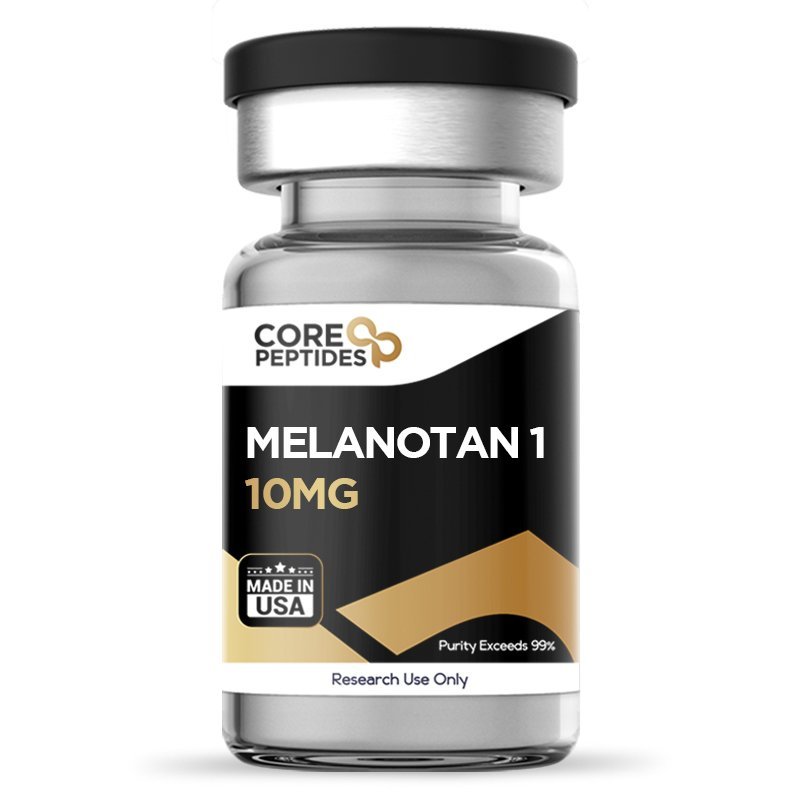
Melanotan 1 (10mg) Peptide – Advanced Melanocortin Research Peptide in the USA
Melanotan 1 (10mg) is a synthetic research peptide structurally related to the endogenous hormone alpha-melanocyte-stimulating hormone (α-MSH). It has been widely studied in laboratory research for its potential role in melanocortin receptor signaling, pigmentation pathways, UV response mechanisms, and inflammatory modulation.
At Core Peptide, we provide high-purity Melanotan 1 (10mg) exclusively for research and laboratory use, supporting scientific investigations conducted across the United States.
What Is Melanotan 1 Peptide?
Melanotan 1 is a 13-amino-acid synthetic peptide designed to closely mimic α-MSH. While it contains the same number of amino acids, Melanotan 1 differs from the endogenous hormone by two amino acid substitutions. Specifically, methionine and L-phenylalanine are replaced with norleucine and D-phenylalanine at positions four and seven, respectively.
Researchers suggest these modifications may enhance peptide stability and receptor affinity, potentially resulting in a longer half-life compared to α-MSH.
(Source: PubChem – Scenesse
https://pubchem.ncbi.nlm.nih.gov/compound/Scenesse)
Melanotan 1 (10mg) and the Melanocortin System
Melanotan 1 is hypothesized to exert its effects through interaction with the melanocortin receptor (MCR) system, a family of G-protein-coupled receptors involved in diverse physiological signaling pathways.
Researchers have identified five melanocortin receptor subtypes:
-
MC1R – Found primarily in melanocytes; associated with pigmentation and UV protection
-
MC2R – Located in the adrenal cortex; linked to cortisol production
-
MC3R – Implicated in energy balance and appetite regulation
-
MC4R – Associated with central nervous system signaling and energy homeostasis
-
MC5R – Expressed in multiple tissues; proposed role in exocrine processes
Scientific literature suggests that Melanotan 1 exhibits a high specificity for MC1R, which may stimulate melanin production in melanocytes.
(Source: Cai & Hruby, 2016
https://doi.org/10.2174/1389203717666160226145330)
Melanotan 1 and Melanin Production Research
MC1R activation is considered a critical regulator of melanogenesis, the biological process responsible for melanin synthesis. When Melanotan 1 activates MC1R, researchers suggest that cyclic adenosine monophosphate (cAMP) levels increase, which may stimulate microphthalmia-associated transcription factor (MITF) expression.
MITF is believed to regulate enzymes required for eumelanin production. Eumelanin is a dark pigment known for its photoprotective properties and potential role in shielding cells from UV-induced damage.
Researchers have suggested that Melanotan 1 may promote melanin production even in the absence of UV exposure, making it an important peptide for laboratory studies focused on pigmentation pathways and cellular UV defense mechanisms.
Melanotan 1 (10mg) and UV Radiation Research
Several phase-based research studies have explored Melanotan 1’s interaction with UV-B radiation and sunlight exposure. In controlled research models comparing peptide exposure to placebo groups, scientists reported a correlation between Melanotan 1 exposure and increased cellular melanin production following UV exposure.
These studies have supported ongoing interest in Melanotan 1 for research related to:
-
UV-induced cellular stress
-
Photoprotection mechanisms
-
DNA damage and repair signaling
Additionally, melanin is thought to support nucleotide excision repair (NER), a process involved in removing UV-induced DNA lesions, highlighting Melanotan 1’s relevance in genomic stability research.
Melanotan 1 Peptide and Inflammatory Research
α-MSH and its analogs, including Melanotan 1, have been studied for potential anti-inflammatory activity. In murine research models of liver fibrosis, α-MSH analog exposure was associated with modulation of inflammatory and fibrogenic gene expression.
Researchers reported decreased expression of inflammatory markers such as COX-2 and α-smooth muscle actin (α-SMA), along with altered activity of matrix metalloproteinases (MMPs). These enzymes are involved in extracellular matrix remodeling and fibrotic processes.
These findings suggest that Melanotan 1 may be relevant in laboratory studies focused on inflammation, fibrosis, and extracellular matrix regulation.
Melanotan 1 and Erythropoietic Protoporphyria Research
Melanotan 1 has been examined in multiple controlled clinical research models investigating erythropoietic protoporphyria (EPP). In these studies, research models exposed to Melanotan 1 appeared to tolerate longer durations of sunlight exposure compared to placebo groups.
Researchers recorded both sunlight exposure duration and discomfort perception, reporting increased tolerance in peptide-exposed groups. These findings have supported further investigation into Melanotan 1’s role in UV response and photoprotection research models.
Chemical Specifications of Melanotan 1 (10mg)
-
Molecular Formula: C₇₈H₁₁₁N₂₁O₁₉
-
Molecular Weight: 1646.87 g/mol
-
Alternate Names: MT-1, Afamelanotide
-
Form: Lyophilized peptide (research use only)
Why Buy Melanotan 1 (10mg) from Core Peptide?
Core Peptide USA is a trusted supplier of high-quality research peptides for laboratories, institutions, and scientific professionals across the United States.
Why researchers choose Core Peptide:
-
USA-based peptide supplier
-
High-purity research peptides
-
Transparent product specifications
-
Secure domestic shipping
-
Strict research-only compliance
Explore our full peptide catalog at:
https://corepeptide.us
References
-
PubChem Compound Summary – Scenesse (Afamelanotide)
https://pubchem.ncbi.nlm.nih.gov/compound/Scenesse -
Cai M, Hruby VJ. The Melanocortin Receptor System.
https://doi.org/10.2174/1389203717666160226145330
Be the first to review “Melanotan 1 (10mg)”
Related products

Peptides for sale

Peptides for sale
Peptides for sale
Peptides for sale

Peptides for sale

Peptides for sale
Peptides for sale
Reviews
There are no reviews yet.