
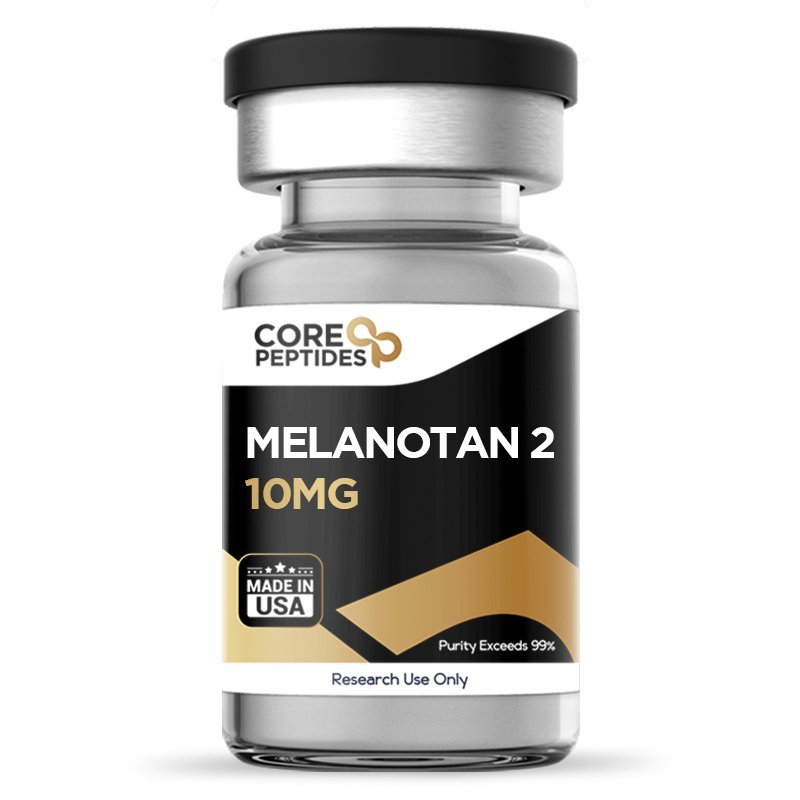
Melanotan 2 (10mg) Peptide – Research Overview
Melanotan 2 (10mg) is a synthetic research peptide analog of the naturally occurring α-melanocyte-stimulating hormone (α-MSH). It is widely studied in laboratory environments for its interaction with melanocortin receptors and its potential influence on pigmentation pathways, neuro-signaling mechanisms, and receptor-mediated cellular activity.
At Core Peptide, we provide Melanotan 2 (10mg) strictly for research and laboratory use only, supporting scientists and institutions across the United States with high-purity peptide compounds manufactured to rigorous quality standards.
Learn more about our full catalog of laboratory-grade compounds on our
Research Peptides Collection
What Is Melanotan 2 (10mg)?
Melanotan 2 peptide, also known as MT-II, is a cyclic heptapeptide engineered to exhibit enhanced stability and receptor affinity compared to endogenous melanocortins. The structural modifications allow Melanotan 2 (10mg) to interact with multiple melanocortin receptor subtypes, making it a valuable compound in experimental research settings.
Chemical Profile
-
Other Name: MT-II
-
Molecular Formula: C₅₀H₆₉N₁₅O₉
-
Molecular Weight: 1024.19 g/mol
-
Form: Lyophilized powder
-
Quantity: 10mg vial
Mechanism of Action: Melanocortin Receptor Activity
Melanotan 2 (10mg) is considered a non-selective melanocortin receptor agonist, demonstrating affinity for four of the five known melanocortin receptor subtypes:
MC1R – Pigmentation Research
The melanocortin-1 receptor (MC1R) is primarily expressed in melanocytes. When Melanotan 2 interacts with MC1R in controlled research models, it may stimulate pathways associated with eumelanin synthesis, contributing to darker pigmentation without ultraviolet exposure. This has made Melanotan 2 (10mg) a frequent subject in sunless tanning research models.
MC3R – Appetite Regulation Models
MC3R is expressed in various tissues, including regions of the brain. Early experimental findings suggest that MC3R may play a role in energy balance and appetite modulation, making Melanotan 2 relevant for receptor-binding studies in metabolic research.
MC4R – Neuro-Signaling and Arousal Pathways
MC4R is located in the hypothalamus and other central nervous system regions. Research suggests Melanotan 2 (10mg) may influence neuronal signaling linked to arousal and motivational behaviors by interacting with MC4 receptors and downstream dopaminergic and oxytocinergic pathways.
MC5R – Peripheral Tissue Studies
MC5R appears throughout various peripheral tissues. While its precise function remains under investigation, researchers continue to explore how Melanotan 2 may affect exocrine and neuromodulatory processes via MC5 receptor activation.
Melanotan 2 (10mg) in Research Studies
Nerve Cell Regeneration Models
Preclinical murine studies have investigated Melanotan 2 (10mg) for its neurotrophic and neuroprotective properties. In experimental nerve injury models, subjects exposed to Melanotan 2 showed partial restoration of sensory function and reduced neurotoxicity when challenged with chemotherapeutic agents. These findings suggest MC4 receptor activation may support neurite outgrowth and neuronal resilience.
📖 External Reference:
PubMed – Melanotan II Synthesis Study
Neuro-Signaling and Arousal Research
Clinical research indicates Melanotan 2 may influence central arousal signaling, with over 80% of research subjects demonstrating increased neuronal activity compared to placebo groups. The compound is believed to act within hypothalamic centers integrating dopaminergic and oxytocinergic systems.
📖 External Reference:
Melanocortin Receptors and Sexual Function – NCBI
Neurodevelopmental Modulation Studies
Additional research suggests Melanotan 2 (10mg) may influence oxytocin-sensitive neural circuits, potentially modulating neurotransmitters such as serotonin, dopamine, glutamate, and GABA. These interactions have led scientists to explore Melanotan 2 in experimental models examining social cognition and synaptic plasticity.
Sunless Tanning Research Models
One of the most studied applications of Melanotan 2 (10mg) is its role in melanin production without UV radiation. By engaging MC1R on melanocytes, Melanotan 2 may promote eumelanin synthesis, leading to visible pigmentation changes in laboratory models. Its cyclic structure allows for prolonged receptor interaction compared to linear α-MSH analogs.
This makes Melanotan 2 a compound of interest for controlled pigmentation research without ultraviolet exposure risks.
Why Choose Core Peptide?
At Core Peptide, we specialize in premium research compounds for U.S. laboratories:
Third-party purity testing
Secure U.S.-based shipping
Clear labeling and documentation
Strict research-only compliance
🔬 Explore additional compounds in our
Peptide Research Library
References
-
Ryakhovsky VV et al., Beilstein Journal of Organic Chemistry
-
Hadley ME, Peptides Journal
-
King SH et al., Current Topics in Medicinal Chemistry
-
Peters B et al., CEN Case Reports
Be the first to review “Melanotan 2 (10mg)”
Related products
Peptides for sale
Peptides for sale
Peptides for sale
Peptides for sale
Peptides for sale
Peptides for sale
Peptides for sale
Peptides for sale
Reviews
There are no reviews yet.