
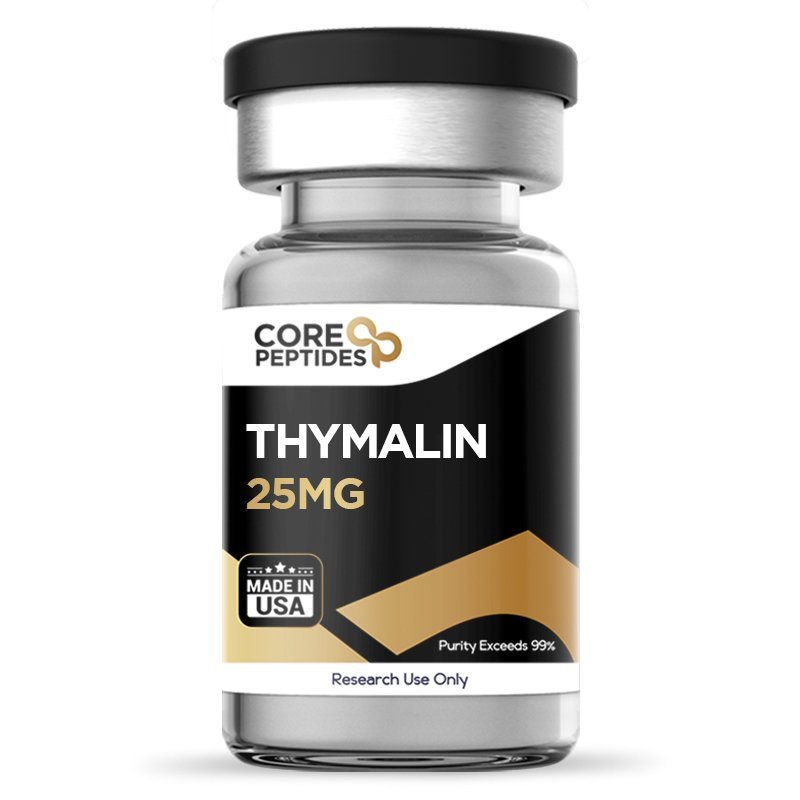
Thymalin (25mg) Peptide – Research-Grade Thymic Polypeptide
Thymalin (25mg) is a naturally derived thymic polypeptide widely researched for its potential role in immune system regulation, cellular differentiation, and aging-related processes. Originally isolated from the thymus gland, Thymalin has become a focal point in peptide research due to its hypothesized influence on immune signaling pathways and thymic function.
At Core Peptide, we supply Thymalin (25mg) exclusively for research and laboratory purposes within the United States. Each vial is manufactured to strict research-grade standards, ensuring consistency and purity for experimental applications.
Explore other thymic and immune research peptides here:
Internal Link: https://corepeptide.us/collections/immune-support-peptides
What Is Thymalin Peptide?
Thymalin is a naturally occurring polypeptide found primarily in the thymus gland, particularly within young thymic and epidermal cells. Research indicates that Thymalin levels decline with age, becoming thinner and less uniform in structure over time. This age-related reduction has driven scientific interest in Thymalin’s role in immune aging and thymic involution.
Early extraction studies identified Thymalin through mild acid extraction of thymic tissue, leading to the discovery of its key dipeptide component, L-Glu-L-Trp. This molecular structure is believed to play a central role in Thymalin’s biological activity and differentiates it from other thymic peptides.
Thymalin vs. Other Thymic Peptides
While Thymalin and Thymulin are both thymus-derived peptides, researchers hypothesize distinct mechanisms of action:
-
Thymalin: A polypeptide believed to regulate thymic and immune functions at optimal levels
-
Thymulin: A zinc-dependent nonapeptide hormone thought to enhance thymic activity, particularly in T-cell suppression scenarios
Compared to synthetic thymic peptides such as Thymogen and Vilon, Thymalin appears to exhibit broader biological activity, possibly due to its natural origin.
Related research peptides:
https://corepeptide.us/products/thymagen-20mg
Chemical Makeup of Thymalin
-
Molecular Formula: C₃₃H₅₄N₁₂O₁₅
-
Molecular Weight: 858.864 g/mol
-
Key Peptide Component: L-Glu-L-Trp
-
Other Known Titles: Thymulin, Thymic Factor
This complex polypeptide structure makes Thymalin (25mg) especially valuable in studies involving immune differentiation and systemic regulation.
Thymalin and Immune System Research
Thymic Function and T-Cell Differentiation
Research suggests that Thymalin may stimulate thymic functions related to T-cell differentiation, cytokine signaling, and lymphocyte secretion. These processes are critical for adaptive immunity and immune surveillance.
Comparative studies of thymic peptides indicate that Thymalin may uniquely influence antioxidant responses, a property not consistently observed in synthetic analogs. This antioxidant activity could indirectly modulate inflammatory pathways exacerbated by oxidative stress.
External Reference:
Johns Hopkins – Disorders of the Immune System
https://www.hopkinsmedicine.org/health/conditions-and-diseases/disorders-of-the-immune-system
Thymalin and Carcinogenesis Research
In long-term murine studies examining tumor development, Thymalin exposure was associated with:
-
Increased average lifespan
-
Reduced aging rate
-
Decreased overall tumor incidence
-
Significant reduction in hematopoietic tumor occurrence
Researchers observed enhanced neutrophil chemotaxis, phagocytosis, and changes in cyclic nucleotide signaling. Additionally, L-Glu-L-Trp was rapidly absorbed and detected in tissues such as the liver and lymph nodes, suggesting efficient systemic distribution.
External Link:
https://pubmed.ncbi.nlm.nih.gov/33237528/
Thymalin and Viral Infection Studies
Clinical research involving subjects with HHV-1 examined thymic peptides similar to Thymalin over a two-month period. Results showed increased CD4+ and CD8+ cytokine levels and no reported viral reactivation.
Further analysis suggested a reduction in immune exhaustion markers PD-1 and PD-L1, along with increased IFN-γ and IL-2, indicating a targeted enhancement of Th1 immune responses without broad immune overstimulation.
Thymalin in Endocrine and Toxic Goiter Models
In studies involving Diffuse Toxic Goiter (DTG), Thymalin was evaluated for its interaction with oxidative stress markers and lipid oxidation rates. Findings indicated that Thymalin, particularly when combined with adjunct compounds, may help mitigate DTG-associated physiological markers in experimental settings.
Thymalin and Hematological Research
In chronic lymphoid leukemia models, Thymalin was studied as part of a combined immune correction strategy. When paired with nonspecific immune interventions, Thymalin exposure was associated with improved physiological function compared to chemotherapy alone.
Thymalin and Geroprotection Research
Long-term geroprotection studies evaluated Thymalin alongside Epithalamin over a 6–8 year period. Observations suggested improvements in:
-
Cardiovascular and neurological function
-
Immune responsiveness
-
Metabolic stability
-
Inflammatory marker regulation
Researchers hypothesized that Thymalin may support thymic maintenance, T-cell restoration, and systemic inflammation modulation—key factors in aging-related immune decline.
External Source:
https://pubmed.ncbi.nlm.nih.gov/9637345/
Thymalin (25mg) for Research Use Only
Thymalin (25mg) from Core Peptide is supplied strictly for laboratory and research purposes. It is not intended for human or veterinary use, diagnosis, treatment, or disease prevention.
Please review our compliance policies before ordering:
Internal Link: https://corepeptide.us/pages/terms-and-conditions
Why Choose Core Peptide for Thymalin (25mg)?
-
USA-focused distribution
-
Research-grade purity standards
-
Secure packaging and fast domestic shipping
-
Transparent sourcing and documentation
Browse our full peptide research catalog:
https://corepepptide.com
Final Thoughts on Thymalin Peptide Research
Thymalin (25mg) remains a cornerstone peptide in thymic and immune research. Its natural origin, complex structure, and extensive research background make it a valuable tool for scientists exploring immune regulation, aging, and cellular differentiation.
As interest in thymic peptides and Khavinson bioregulators continues to grow, Thymalin stands out as a foundational compound for advanced laboratory investigation.
Be the first to review “Thymalin (25mg)”
Related products
Peptides for sale

Peptides for sale
Peptides for sale
Peptides for sale
Peptides for sale
Peptides for sale
Peptides for sale
Peptides for sale
Reviews
There are no reviews yet.