
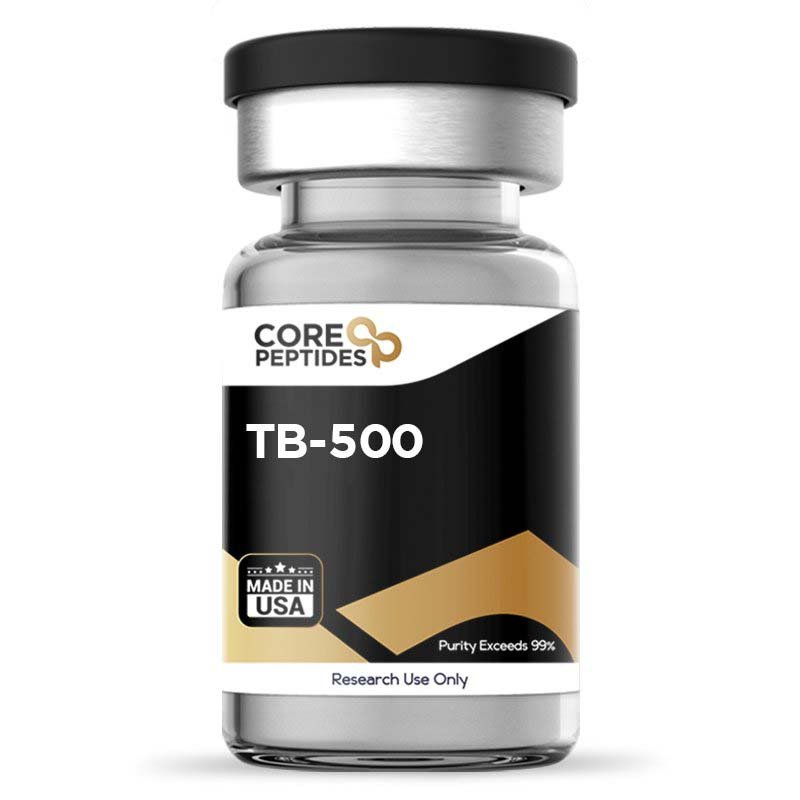
TB-500 (Thymosin Beta 4) (5mg / 10mg)
TB-500 (Thymosin Beta 4) is a synthetic peptide widely utilized in laboratory and preclinical research settings. TB-500 is the synthetic analog of Thymosin Beta 4 (Tβ4), a naturally occurring intracellular protein encoded by the TMSB4X gene and found in high concentrations within thymic tissue, blood platelets, and wound fluid.
At Core Peptide USA, TB-500 (5mg and 10mg) is supplied strictly for research and laboratory purposes only, ensuring high purity, accurate labeling, and reliable sourcing for U.S.-based researchers.
Explore additional research peptides in our catalog: https://corepeptide.us
What Is TB-500 Peptide?
TB-500 peptide is a 43–amino-acid synthetic version of naturally occurring Thymosin Beta 4. It is known for being highly soluble in water, lightweight, and structurally stable—attributes that make TB-500 especially suitable for controlled laboratory research.
Researchers have proposed that TB-500 may exhibit biological activities similar to endogenous Thymosin Beta 4, including:
-
Possible modulation of cell migration
-
Potential involvement in angiogenesis
-
Possible effects on wound healing pathways
-
Hypothesized influence on inflammatory signaling
-
Observed activity in tissue repair and regeneration models
Due to these properties, TB-500 peptide continues to attract interest across cellular biology, regenerative research, and molecular signaling studies.
Overview of TB-500 Mechanism of Action
A key functional region of TB-500 includes the peptide sequence (17)LKKTETQ(23), which researchers believe plays a central role in actin binding.
Actin Interaction and Cell Migration
Actin proteins form the structural backbone of the cytoskeleton, allowing cells to maintain shape, migrate, and divide. TB-500 is believed to interact with globular actin (G-actin), preventing its polymerization into filamentous actin (F-actin) through a process known as actin sequestration.
This interaction may:
-
Increase the availability of G-actin
-
Influence cytoskeletal flexibility
-
Modify cellular motility and morphology
Such effects are relevant to research fields examining tissue regeneration, cell migration, and angiogenesis.
Chemical Makeup of TB-500
-
Molecular Formula: C₂₁₂H₃₅₀N₅₆O₇₈S
-
Molecular Weight: ~4963 g/mol
-
Amino Acid Length: 43 residues
-
Alternate Name: Thymosin Beta 4
TB-500 supplied by Core Peptide is available in 5mg and 10mg research vials to support varied experimental protocols.
TB-500 Peptide Research Highlights
TB-500 and Inflammation Pathways
Research suggests TB-500 may influence inflammatory responses through regulation of microRNA-146a (miR-146a). This microRNA is known to interact with inflammatory mediators such as IRAK1 and TRAF6, which are involved in cytokine signaling.
Experimental findings indicate that TB-500 may suppress these signaling pathways, potentially contributing to observed anti-inflammatory effects in controlled research models.
National Library of Medicine (PubMed) – https://pubmed.ncbi.nlm.nih.gov
TB-500 and Acute Wound Models
Animal studies conducted on murine wound models demonstrated that synthetic Thymosin Beta 4 (TB-500) was associated with:
-
Increased re-epithelialization rates
-
Enhanced wound contraction
-
Elevated collagen deposition
-
Possible stimulation of angiogenesis
These findings have led researchers to describe TB-500 as a multi-functional wound healing factor in preclinical studies.
TB-500 and Chronic Wound Research
Additional studies examined TB-500’s effects in diabetic, aged, and steroid-treated animal models. Results suggested that TB-500 accelerated wound healing regardless of pre-existing conditions. Phase II trials involving pressure ulcers and stasis wounds indicated that TB-500 may reduce healing time by up to one month.
TB-500 and Cardiac Research
In cardiovascular research, TB-500 has been studied for its potential influence on:
-
Cardiomyocyte survival
-
Angiogenesis in hypoxic conditions
-
Reduction of right ventricular hypertrophy
-
Activation of integrin-linked kinase (ILK) and Akt pathways
These findings suggest possible relevance of TB-500 in cardiac tissue regeneration models, although further research is ongoing.
TB-500 and Hair Follicle Studies
Mouse studies evaluating TB-500 showed increased hair follicle density and hair shaft formation. Molecular analysis revealed upregulation of mRNA and protein expression associated with follicular growth, positioning TB-500 as a molecule of interest in hair biology research.
TB-500 and Angiogenesis
Research involving human umbilical vein endothelial cells (HUVEC) and murine ischemia models suggests TB-500 may regulate angiogenesis through the Notch and NF-κB pathways. Elevated expression of VEGFA, Ang2, Tie2, and CD31 has been observed in experimental settings.
TB-500 and Corneal Tissue Research
Corneal injury models indicate TB-500 may:
-
Modulate cytokine expression
-
Reduce neutrophil infiltration
-
Exhibit anti-apoptotic activity
-
Activate survival pathways involving Akt and ILK
These effects may contribute to accelerated corneal healing in preclinical research environments.
TB-500 (5mg / 10mg) from Core Peptide USA
When sourcing TB-500 peptide in the United States, Core Peptide provides:
-
High-purity research peptides
-
Accurate dosing (5mg and 10mg)
-
Secure U.S.-based shipping
-
Clear labeling for laboratory use
-
Strict research-only compliance
Be the first to review “TB-500 (Thymosin Beta 4) (5mg / 10mg)”
Related products
Peptides for sale
Peptides for sale
Peptides for sale
Peptides for sale
Peptides for sale
Peptides for sale
Peptides for sale
Peptides for sale
Reviews
There are no reviews yet.