
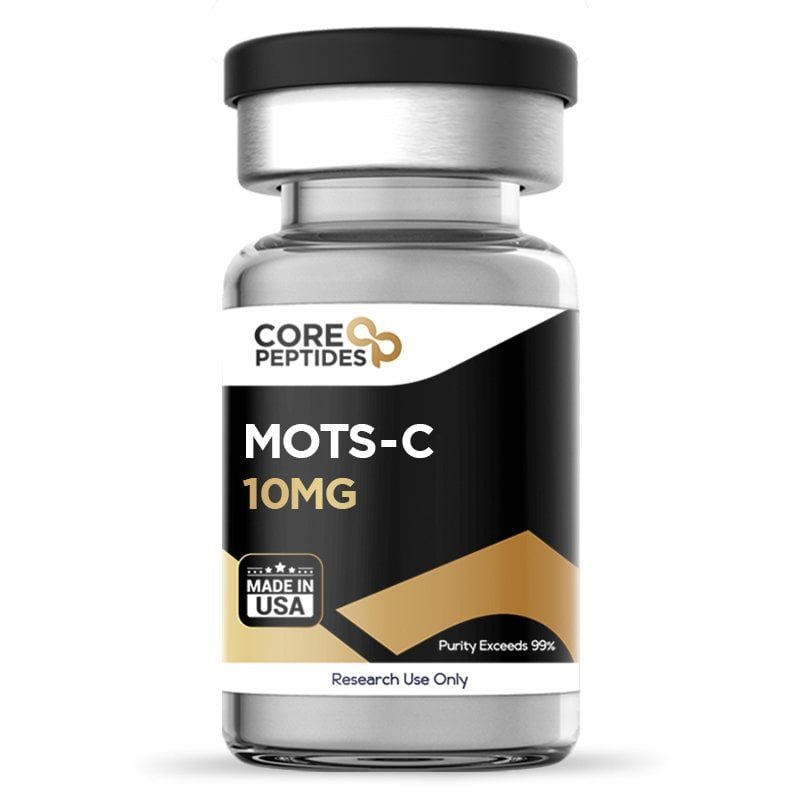


MOTS-C (10mg) Research Peptide
MOTS-C (10mg)
MOTS-C (10mg) is a novel mitochondrial-derived peptide (MDP) that has attracted growing interest in laboratory and academic research focused on cellular metabolism, mitochondrial signaling, and age-associated metabolic regulation. At Core Peptide, we provide high-purity MOTS-C (10mg) strictly for research and laboratory use to qualified researchers throughout the United States.
MOTS-C—short for mitochondrial open reading frame of the 12S rRNA-c—is composed of only 16 amino acids, yet research suggests it may exert broad regulatory actions at both the cellular and systemic levels. Unlike traditional peptides encoded in nuclear DNA, MOTS-C is encoded within the mitochondrial genome, positioning it as a unique signaling molecule often described as a “mitokine” or mitochondrial hormone.
Explore additional research peptides on the
Core Peptide Research Products Page
https://corepeptide.us
What Is MOTS-C Peptide?
MOTS-C peptide is expressed in multiple tissues and has been detected in circulation, suggesting it may function both intracellularly and as a systemic signaling molecule. Research indicates that under conditions of metabolic stress, MOTS-C may translocate from the mitochondria into the cell nucleus, where it appears to influence gene expression associated with metabolic adaptation.
One of the most studied pathways linked to MOTS-C (10mg) is the AMP-activated protein kinase (AMPK) pathway, a key regulator of cellular energy homeostasis. AMPK activation is commonly associated with improved glucose utilization, lipid metabolism, and adaptive responses to energy stress.
External Reference:
https://www.ncbi.nlm.nih.gov/pmc/articles/PMC5116416/
Chemical Makeup of MOTS-C (10mg)
-
Molecular Formula: C₁₀₁H₁₅₂N₂₈O₂₂S₂
-
Molecular Weight: 2174.64 g/mol
-
Amino Acid Length: 16 residues
Other Known Names
-
Mitochondrial-derived peptide MOTS-C
-
Mitochondrial open reading frame of the 12S rRNA-c
This compact structure allows MOTS-C (10mg) to serve as an efficient signaling molecule in metabolic research models.
MOTS-C (10mg) and Cellular Metabolism
Animal research models suggest that MOTS-C peptide may influence cellular and tissue metabolism, particularly in skeletal muscle. As organisms age, skeletal muscle tissue often exhibits reduced insulin sensitivity and impaired glucose uptake. Exposure to MOTS-C has been associated with enhanced AMPK responsiveness, which may lead to increased expression of glucose transporters and improved metabolic efficiency at the cellular level.
In addition to AMPK signaling, MOTS-C appears to interact with metabolic pathways such as:
-
Folate-methionine cycle
-
De novo purine biosynthesis
-
NAD⁺-associated regulatory networks
These interactions suggest a broader role for MOTS-C (10mg) in coordinating cellular energy priorities and metabolic adaptation.
External Reference:
https://pubmed.ncbi.nlm.nih.gov/27216708/
MOTS-C Peptide and Fat Cell Metabolism
Research involving high-fat diet murine models has explored MOTS-C’s potential role in adipose tissue metabolism. Findings indicate that MOTS-C may relocate to the nucleus and interact with genes containing antioxidant response elements (AREs), potentially influencing transcription factors such as NRF2.
By inhibiting components of the folate cycle linked to purine synthesis, MOTS-C may indirectly activate AMPK, leading to increased glucose utilization and altered lipid metabolism. In these models, subjects exposed to MOTS-C appeared leaner and more metabolically active, suggesting a potential role in preventing diet-induced metabolic imbalance.
External Reference:
https://www.ncbi.nlm.nih.gov/pmc/articles/PMC4350682/
MOTS-C (10mg) and Bone-Related Research
Emerging studies suggest MOTS-C peptide may influence bone metabolism by interacting with the TGF-β/SMAD signaling pathway. Research indicates that MOTS-C exposure may upregulate genes such as:
-
TGF-β1
-
TGF-β2
-
Smad7
Additionally, osteogenic markers including ALP, Runx2, and Bglap have shown increased expression in experimental models. These findings suggest MOTS-C may play a role in osteogenic differentiation and bone tissue development, although this area remains under active investigation.
MOTS-C and Endothelial Function
Rather than acting directly on cardiac tissue, researchers hypothesize that MOTS-C may influence endothelial cells lining blood vessels. Studies have observed correlations between circulating MOTS-C levels and vascular reactivity, suggesting its potential use as a biomarker for endothelial health.
The proposed mechanism again centers on AMPK activation, which is known to affect endothelial nitric oxide signaling and vascular homeostasis.
External Reference:
https://pubmed.ncbi.nlm.nih.gov/30725119/
MOTS-C Peptide and Cellular Longevity
MOTS-C has also been explored in the context of cellular aging and lifespan regulation. Certain polymorphisms involving amino acid substitutions (e.g., glutamate to lysine) appear to influence peptide functionality, although the precise biological consequences remain unclear.
Researchers have suggested a possible endocrine-like role for MOTS-C as a mitokine linking mitochondrial signaling with longevity-associated pathways. While these findings are preliminary, they position MOTS-C (10mg) as a compelling subject for aging-related cellular research.
Why Choose Core Peptide?
Core Peptide supports advanced peptide research by offering:
-
USA-based distribution
-
High-purity research peptides
-
Secure, discreet shipping
-
Clear documentation and compliance standards
Browse related mitochondrial and metabolic research compounds at:
https://corepeptide.us
Be the first to review “MOTS-C (10mg)”
Related products
Peptides for sale

Peptides for sale

Peptides for sale


Peptides for sale
Peptides for sale

Peptides for sale

Peptides for sale
Reviews
There are no reviews yet.