
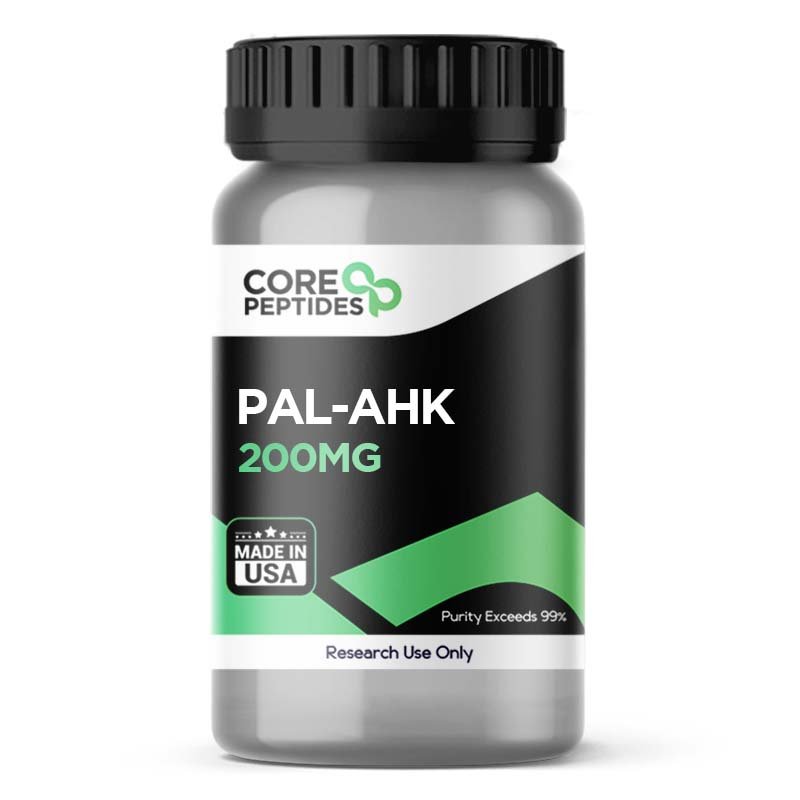
Pal-AHK (200mg) – Advanced Research Peptide for Skin and Cellular Studies in the United States
Pal-AHK (200mg), also known as Palmitoyl AHK, is a synthetic tripeptide composed of alanine, histidine, and lysine, enhanced with a palmitoyl group. At Core Peptide, we supply Pal-AHK (200mg) strictly for laboratory and scientific research purposes, supporting dermatological, cellular, and molecular research across the United States.
Pal-AHK is derived from the AHK tripeptide, which has been studied for its potential role in extracellular matrix (ECM) support, antioxidant activity, and cellular viability. The addition of the palmitoyl group is widely regarded as a strategy to enhance cellular penetration without significantly altering the peptide’s underlying mechanism of action.
What Is Pal-AHK (200mg)?
Pal-AHK (200mg) is a lipophilic peptide designed to improve interaction with cell membranes. While most studies have focused on non-palmitoylated AHK, researchers suggest that palmitoylation primarily enhances permeability and stability, allowing the peptide to exert similar biological effects more efficiently in experimental settings.
Research suggests Pal-AHK may support:
-
Collagen and elastin synthesis
-
Antioxidant defense mechanisms
-
Cellular proliferation and viability
These properties make Pal-AHK (200mg) a valuable compound in research related to skin biology, hair follicle dynamics, and oxidative stress models.
Learn more about our quality standards here:
Peptide Quality Assurance – Core Peptide
Chemical Makeup of Pal-AHK (200mg)
Pal-AHK’s structure contributes to its research relevance:
-
Molecular Formula: C₃₁H₅₆N₆O₅
-
Molecular Weight: 592.8 g/mol
-
Other Names: Palmitoyl AHK
Additional peptide data can be explored through authoritative resources such as:
PubChem – Peptide Compounds Overview
Pal-AHK (200mg) and Antioxidant Research
Pal-AHK Peptide and Oxidative Stress
Oxidative stress is widely recognized as a contributor to cellular damage and aging. Research suggests that AHK-based peptides may exhibit antioxidant activity, potentially neutralizing free radicals that cause oxidative damage.
Studies indicate that Pal-AHK may reduce the expression of transforming growth factor-β1 (TGF-β1), a molecule involved in inflammation and extracellular matrix remodeling. Excessive TGF-β1 activity has been linked to chronic inflammation and tissue damage in certain experimental contexts. By modulating this pathway, Pal-AHK may contribute to improved cellular environments in laboratory models.
Researchers have also suggested that the peptide’s amino acid composition supports dermal cell multiplication and viability, which may indirectly enhance collagen production within ECM research models.
Pal-AHK (200mg) and Hair Follicle Research
Pal-AHK Peptide and Hair Growth Pathways
While direct studies on Pal-AHK and hair growth are limited, research on structurally related AHK derivatives suggests promising mechanisms. These studies indicate that AHK-based peptides may support the proliferation of dermal papilla cells (DPCs) and reduce apoptosis within hair follicles.
Pal-AHK is theorized to influence the Bcl-2/Bax ratio, a key regulator of programmed cell death. Increasing this ratio may favor cell survival by reducing apoptotic signaling. Additionally, Pal-AHK may lower the expression of apoptosis-related proteins such as cleaved caspase-3 and poly (ADP-ribose) polymerase (PARP), both of which are involved in cellular disassembly during apoptosis.
Pal-AHK (200mg) and VEGF Expression
Research suggests Pal-AHK may also influence vascular endothelial growth factor (VEGF) expression. VEGF plays a critical role in angiogenesis and is believed to support blood vessel formation around hair follicles. Improved vascularization may enhance nutrient and oxygen delivery to hair follicles, potentially supporting follicular health in experimental models.
By reducing TGF-β1 and increasing VEGF expression, Pal-AHK may create conditions favorable to hair follicle maintenance and growth in laboratory research environments.
For broader scientific context, see:
NCBI – Growth Factor and Peptide Research
Pal-AHK (200mg) and Skin Cell Research
Pal-AHK Peptide and Collagen Synthesis
Collagen and elastin are essential proteins within the extracellular matrix that provide skin strength, elasticity, and resilience. Research on AHK peptides suggests they may stimulate dermal fibroblast proliferation, cells responsible for producing collagen and other ECM components.
Cell culture studies using normal dermal fibroblasts have shown that AHK may significantly increase collagen type I production and enhance cell viability. Some findings reported collagen production increases of up to 300% compared to controls. Although Pal-AHK itself requires further direct investigation, its structural similarity suggests comparable potential in ECM research models.
Pal-AHK (200mg) and Dermal Viability
Researchers have suggested that Pal-AHK may support the renewal of the extracellular matrix by promoting fibroblast activity and protein synthesis. These effects make Pal-AHK (200mg) particularly relevant in laboratory research focused on skin aging, wound healing pathways, and cellular regeneration.
For peer-reviewed literature, visit:
BMC Biochemistry – Peptide Antioxidation Studies
Why Choose Core Peptide for Pal-AHK (200mg)?
Core Peptide is a trusted United States-based supplier of Pal-AHK (200mg) for research use.
Our Advantages:
-
High-purity, lab-verified peptides
-
Clear research-use-only labeling
-
Fast and secure US shipping
-
Transparent sourcing and documentation
Browse our full catalog:
Research Peptides – Core Peptide
Order Pal-AHK (200mg) in the United States
If you are seeking a reliable Pal-AHK (200mg) supplier in the United States, Core Peptide provides purity, consistency, and trusted research support.
Be the first to review “Pal-AHK (200mg)”
Related products
Peptides for sale
Peptides for sale
Peptides for sale
Peptides for sale
Peptides for sale
Peptides for sale
Peptides for sale
Reviews
There are no reviews yet.