
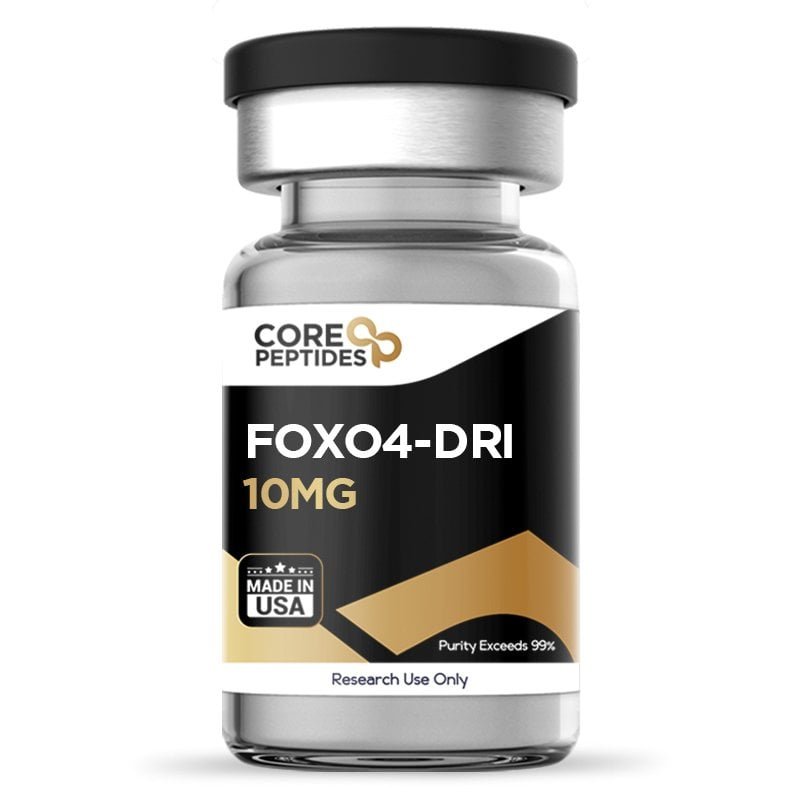
FOXO4-DRI (10mg) Research Peptide
FOXO4-DRI (10mg) is an advanced research peptide studied for its potential role in cellular senescence, transcription factor regulation, and apoptosis signaling pathways. Available through Core Peptide USA, this compound is supplied exclusively for research and laboratory use and is intended for qualified professionals conducting experimental and in vitro studies within the United States.
The FOXO family—Forkhead box O transcription factors—includes FOXO1, FOXO3, FOXO4, and FOXO6. Among them, FOXO4 is known to regulate key cellular pathways involved in insulin signaling, cell cycle control, oxidative stress response, and differentiation. The synthetic peptide FOXO4-DRI (also known as Proxofim) is a modified fragment of the endogenous FOXO4 protein engineered to interfere with FOXO4-p53 interactions.
What Is FOXO4-DRI?
FOXO4-DRI (Forkhead box O transcription factor 4 – D-Retro-Inverso) is a synthetic retro-inverso peptide designed to mimic a functional region of FOXO4 while replacing L-amino acids with D-amino acids. This structural modification may increase resistance to enzymatic degradation, allowing the peptide to persist longer in experimental environments compared to its naturally occurring counterpart.
The primary research interest in FOXO4-DRI (10mg) centers on its potential ability to disrupt FOXO4-p53 binding, a mechanism believed to contribute to the survival of senescent cells. By inhibiting this interaction, FOXO4-DRI may restore p53 activity, allowing damaged or aged cells to undergo programmed apoptosis rather than persisting in a dysfunctional state.
Mechanism of Action (Research Overview)
In senescent cells, FOXO4 appears to bind to the tumor suppressor protein p53, preventing p53 from binding to DNA and initiating apoptosis. This leads to the accumulation of senescent cells, which are known to contribute to tissue dysfunction through the senescence-associated secretory phenotype (SASP).
Research suggests that FOXO4-DRI peptide may competitively inhibit FOXO4, freeing p53 to resume its regulatory role in the cell cycle. This selective action appears to primarily affect senescent or damaged cells, while leaving healthy cells largely unaffected, making FOXO4-DRI a compound of interest in aging and longevity research models.
Chemical Profile
-
Molecular Formula: C228H388N86O64
-
Molecular Weight: 5358.05 g/mol
-
Other Names: Proxofim, FOXO4a, AFX, AFX1, MLLT7
FOXO4-DRI Peptide and Cellular Senescence
Multiple laboratory studies indicate that FOXO4-DRI may reduce senescent cell burden without halting the natural aging process entirely. In a landmark 2017 study involving aged murine models, FOXO4-DRI administration was associated with improved physical performance, enhanced renal markers, and increased fur density—effects believed to result from selective removal of senescent cells rather than generalized cell destruction.
Senescent cells are known to secrete inflammatory cytokines, growth factors, and proteases that disrupt tissue homeostasis. By potentially reducing these cells, FOXO4-DRI (10mg) is widely studied in experimental settings focused on tissue regeneration, inflammation control, and biological aging mechanisms.
Cardiovascular and Proteasome Research
Proteasome activity naturally declines with age, impairing the removal of damaged cellular components. FOXO proteins are known regulators of proteasome expression, and FOXO4-DRI research suggests it may help normalize proteostasis by removing cells no longer capable of efficient protein turnover. This has made FOXO4-DRI relevant in experimental cardiovascular and metabolic aging models.
FOXO4-DRI and Insulin Signaling
FOXO4 is closely tied to the insulin and insulin-like growth factor signaling (IIS) pathway, which influences stress resistance, metabolism, and lifespan regulation. Experimental data suggest that modulating FOXO4 activity with FOXO4-DRI may impact how cells respond to nutrient availability and oxidative stress—key variables in longevity research.
Oxidative Stress and Inflammatory Pathways
FOXO4 plays a role in cellular defense against oxidative stress by regulating antioxidant enzyme transcription. During oxidative or inflammatory stress, FOXO4 may translocate to the nucleus and activate genes such as MnSOD, catalase, and glutathione peroxidase. FOXO4-DRI may inhibit this nuclear translocation selectively in senescent cells, contributing to apoptosis while sparing healthy cells.
Neurological and Endocrine Research Applications
Altered FOXO expression has been observed in experimental models of neurodegenerative disorders. Declining proteasome activity and dysregulated FOXO signaling may contribute to neuronal dysfunction over time. Researchers have hypothesized that FOXO4-DRI peptide could help normalize FOXO protein levels in such models.
Additionally, in vitro studies involving senescent Leydig cells suggest FOXO4-DRI may selectively induce apoptosis in aged testosterone-producing cells, making it relevant for experimental research into age-related endocrine decline.
FOXO4-DRI (10mg) from Core Peptide USA
At Core Peptide, we supply FOXO4-DRI (10mg) to meet the needs of U.S.-based research laboratories seeking reliable, high-purity peptide compounds. Each product is labeled clearly for research identification and handled under strict quality standards.
👉 Learn more about our full peptide catalog:
Internal Link: https://corepeptide.us/collections/all
👉 Review our research use disclaimer and ordering terms:
Internal Link: https://corepeptide.us/pages/terms-and-conditions
External Scientific References
For peer-reviewed research related to FOXO4-DRI and senescence mechanisms, visit:
-
National Center for Biotechnology Information (NCBI):
https://pubmed.ncbi.nlm.nih.gov/15193307/ -
Frontiers in Bioengineering & Biotechnology – FOXO4-DRI studies:
https://www.ncbi.nlm.nih.gov/pmc/articles/PMC8116695
Be the first to review “FOXO4-DRI (10mg)”
Related products
Peptides for sale
Peptides for sale
Peptides for sale
Peptides for sale
Peptides for sale
Peptides for sale
Peptides for sale

Peptides for sale
Reviews
There are no reviews yet.