


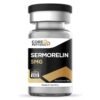
B7-33 (6mg) Peptide – Research-Grade Relaxin Analog
B7-33 (6mg) is a synthetic peptide analog derived from the relaxin-2 hormone, engineered to selectively interact with the relaxin family peptide receptor 1 (RXFP1). Unlike full-length relaxin-2, B7-33 is a minimized peptide fragment designed to preserve receptor activation while offering improved stability and selectivity in experimental models. Because of these characteristics, B7-33 (6mg) has become an area of growing interest in fibrosis, cardiovascular, renal, and inflammatory pathway research.
At Core Peptide, we supply B7-33 (6mg) exclusively for research and laboratory use, supporting U.S.-based investigators with high-purity peptide compounds, transparent sourcing, and fast domestic fulfillment. Researchers exploring complementary signaling compounds may also review our broader Research Peptides Collection.
Scientific Overview of B7-33 (6mg)
B7-33 was developed as a biased agonist of the RXFP1 receptor. Native relaxin-2 activates multiple intracellular signaling pathways, some of which are associated with unwanted systemic effects in experimental settings. B7-33 was engineered to preferentially activate anti-fibrotic and cytoprotective signaling cascades while minimizing pathways associated with vasodilatory or hormonal side effects.
Due to this signaling bias, B7-33 (6mg) is frequently studied as a tool peptide for understanding how RXFP1 activation influences extracellular matrix remodeling, collagen deposition, and tissue elasticity.
Mechanism of Action (Research Hypothesis)
Researchers hypothesize that B7-33 (6mg) binds selectively to the RXFP1 receptor and initiates downstream intracellular signaling without fully replicating the complete signaling profile of endogenous relaxin-2.
Proposed mechanisms include:
-
Activation of RXFP1-associated G-protein pathways
-
Modulation of ERK1/2 and cAMP signaling
-
Downregulation of TGF-β–mediated fibrotic pathways
-
Reduced collagen synthesis and fibroblast activation
-
Promotion of tissue remodeling and elasticity in experimental models
This selective signaling behavior has made B7-33 (6mg) particularly valuable in fibrosis research, where excessive extracellular matrix deposition is a defining characteristic.
Chemical Characteristics of B7-33 (6mg)
-
Peptide Class: Relaxin-2 analog
-
Target Receptor: RXFP1
-
Form: Lyophilized powder
-
Purity: Research-grade
-
Intended Use: Laboratory and scientific research only
For molecular and structural reference data, researchers may consult peer-reviewed summaries available through the National Center for Biotechnology Information (NCBI) and related peptide chemistry databases.
Research Areas Involving B7-33 (6mg)
Fibrosis Research Models
One of the most prominent research applications of B7-33 (6mg) is in organ fibrosis models, including cardiac, renal, pulmonary, and hepatic fibrosis. Studies suggest that selective RXFP1 activation may reduce fibroblast proliferation and suppress excessive collagen accumulation, making B7-33 a valuable comparator peptide in anti-fibrotic pathway investigations.
Cardiovascular Research
RXFP1 signaling has been implicated in vascular compliance and myocardial remodeling. Experimental data indicate that B7-33 may preserve beneficial relaxin-mediated effects on cardiac tissue without triggering broader systemic vasodilation. As a result, B7-33 (6mg) is frequently included in cardiovascular signaling and myocardial injury research.
Renal Function Studies
Preclinical research has explored the role of RXFP1 activation in renal perfusion and structural remodeling. B7-33 is often studied in kidney disease models to evaluate whether selective relaxin signaling may influence fibrosis progression and renal tissue integrity.
Inflammatory Pathway Research
Researchers have also examined whether B7-33 (6mg) indirectly modulates inflammatory mediators by altering fibroblast and immune cell interactions. This makes the peptide relevant in studies investigating chronic inflammation and tissue repair dynamics.
Comparative Relaxin Research
Because B7-33 is a truncated relaxin analog, it is frequently used alongside native relaxin-2 to compare full agonist vs biased agonist receptor responses. These comparisons help clarify which intracellular pathways are most critical for anti-fibrotic and cytoprotective effects.
How B7-33 (6mg) Fits Within Peptide Research
In peptide research catalogs, B7-33 (6mg) is often grouped with compounds targeting growth factors, cytokines, and tissue-regulating hormones. While it is mechanistically distinct from growth hormone–related peptides such as Sermorelin & GHRP-2 Blend, researchers may study these compounds in parallel when evaluating systemic signaling, tissue repair, and anabolic vs anti-fibrotic responses.
Why Order B7-33 (6mg) from Core Peptide?
-
U.S.-based peptide supplier
-
High-purity research-grade compounds
-
Fast shipping within the United States
-
Clear documentation and labeling
-
Strict research-only compliance
Explore additional experimental compounds in our Core Peptide catalog to support multi-pathway research designs.
External Scientific References
-
National Center for Biotechnology Information (NCBI) – Relaxin and RXFP1 signaling
-
PubMed – B7-33 and biased agonism studies
-
Nature Reviews Endocrinology – Relaxin peptide signaling pathways
-
Journal of Molecular Endocrinology – Fibrosis and RXFP1 modulation research
Be the first to review “Sermorelin & GHRP-2 Blend (10mg)”
Related products
Peptides for sale
Peptides for sale
Peptides for sale
Peptides for sale
Peptides for sale
Peptides for sale
Peptides for sale
Reviews
There are no reviews yet.