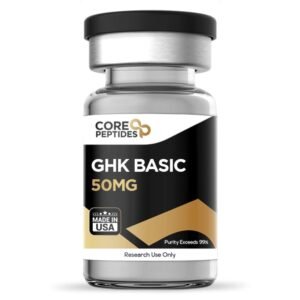
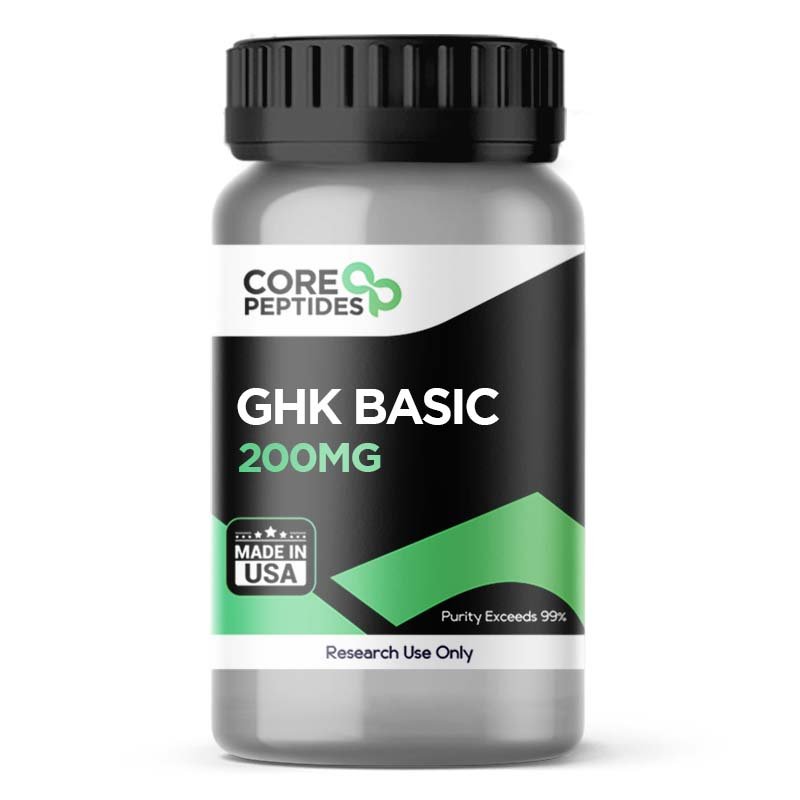
GHK Basic (Tripeptide-1) (200mg) Research Peptide
GHK Basic (Tripeptide-1) (200mg) is a naturally occurring tripeptide extensively studied in biochemical and cellular research for its role in tissue repair, wound healing, inflammatory modulation, and oxidative stress pathways. Offered by Core Peptide USA, this peptide is manufactured strictly for laboratory and research purposes only and supplied to research professionals throughout the United States.
GHK Basic consists of the amino acid sequence glycine–histidine–lysine, a structure identified in plasma, saliva, urine, and various tissues in the human body. Due to its strong affinity for copper ions and its ability to regulate multiple cellular signaling pathways, GHK Basic (Tripeptide-1) remains a peptide of ongoing interest in regenerative and molecular research.
What Is GHK Basic (Tripeptide-1)?
GHK Basic (Tripeptide-1) is a short-chain signaling peptide produced by several cell types, including fibroblasts, macrophages, lymphocytes, and platelets. It is also found in tissues such as the liver and brain. Research suggests that GHK may act as a regulatory molecule influencing wound repair, immune response, and extracellular matrix remodeling.
The peptide demonstrates a notable affinity for copper, forming copper-bound complexes frequently studied for their enhanced biological activity. Fluctuations in endogenous GHK levels over time have been associated with cellular aging, reduced tissue regeneration, and diminished immune efficiency, making this peptide particularly relevant in aging and repair research models.
Chemical Makeup
Molecular Formula: C₁₄H₂₄N₆O₄
Molecular Weight: 340.4 g/mol
Other Known Names:
Glycyl-L-histidyl-L-lysine, Tripeptide-1, NSC 379527, Copper peptide
This defined chemical structure makes GHK Basic (Tripeptide-1) (200mg) suitable for reproducible experimental protocols and controlled laboratory analysis.
Research & Scientific Studies
GHK Basic Peptide and Wound Healing
GHK Basic (Tripeptide-1) has been widely studied for its role in wound healing processes. Clinical and preclinical research involving copper-bound GHK demonstrated enhanced closure of diabetic neuropathic ulcers compared to control treatments. Larger plantar ulcers showed the most pronounced improvement, with a notably reduced incidence of wound infections in GHK-treated groups.
Animal studies further support these findings. In rabbit models, wounds exposed to GHK exhibited higher neutrophil infiltration and increased blood vessel density compared to untreated wounds. These findings suggest a possible acceleration of granulation tissue formation, which is critical for effective wound repair. Researchers propose that increased antioxidant enzyme activity and improved vascular development may contribute to these outcomes.
Additional research in ischemic wound models demonstrated that GHK exposure correlated with a significant reduction in wound size and lower levels of pro-inflammatory markers such as TNF-alpha, MMP-2, and MMP-9. These biomarkers are known contributors to chronic inflammation and tissue degradation.
GHK Basic and Skin Cell Research
GHK Basic (Tripeptide-1) has been extensively evaluated for its role in skin cell function and extracellular matrix synthesis. Research suggests that GHK may stimulate collagen production by activating fibroblasts, cells responsible for generating structural proteins in connective tissue.
Scientists hypothesize that GHK fragments may be released naturally during collagen hydrolysis at wound sites. These fragments may act as signaling molecules that initiate collagen synthesis, elastin production, and glycosaminoglycan formation. Together, these elements contribute to skin strength, elasticity, and hydration.
Clinical research also suggests that GHK may support dermal keratinocyte proliferation, potentially increasing skin thickness and improving hydration. In studies involving resurfaced skin models, GHK exposure was associated with improved skin quality and higher overall satisfaction, even when visual differences such as erythema resolution were minimal.
GHK Basic and Inflammation & Oxidative Stress
GHK Basic (Tripeptide-1) has demonstrated potential antioxidant and anti-inflammatory activity in multiple research models. Studies suggest that the peptide may neutralize reactive aldehydes produced during lipid peroxidation and UV exposure, including malondialdehyde, acrolein, and 4-hydroxynonenal.
Additionally, GHK may inhibit oxidation of low-density lipoproteins (LDL), a process associated with oxidative damage. Researchers propose that GHK may reduce iron release from ferritin by binding to its iron-release channels, potentially decreasing iron-catalyzed oxidative reactions by up to 87% in damaged tissues.
Pulmonary and Systemic Research
The anti-inflammatory potential of GHK Basic has also been explored in pulmonary research. In murine models of lipopolysaccharide-induced lung injury, GHK exposure appeared to reduce reactive oxygen species production and inflammatory cytokines such as TNF-1 and IL-6.
Researchers observed inhibition of NF-κB and p38 MAPK signaling pathways, which are known to regulate inflammatory responses. Additional findings suggest that GHK may upregulate Nrf2 expression, contributing to enhanced antioxidant defense in alveolar epithelial cells, particularly under oxidative stress conditions such as smoke exposure.
Why Choose Core Peptide USA?
At CorePeptide.us, we are committed to supporting peptide research throughout the United States by providing:
-
High-purity research peptides
-
Transparent sourcing and documentation
-
U.S.-based distribution and support
-
Strict research-use-only compliance
Learn more about our quality standards on our About Us page or review our Terms and Conditions before placing an order.
External Scientific References
For peer-reviewed research related to GHK Basic (Tripeptide-1) (200mg), visit:
-
NCBI – PubChem Compound Summary: https://pubchem.ncbi.nlm.nih.gov
-
Pickart & Margolina, International Journal of Molecular Sciences: https://www.ncbi.nlm.nih.gov/pmc/articles/PMC6073419/


Reviews
There are no reviews yet.