
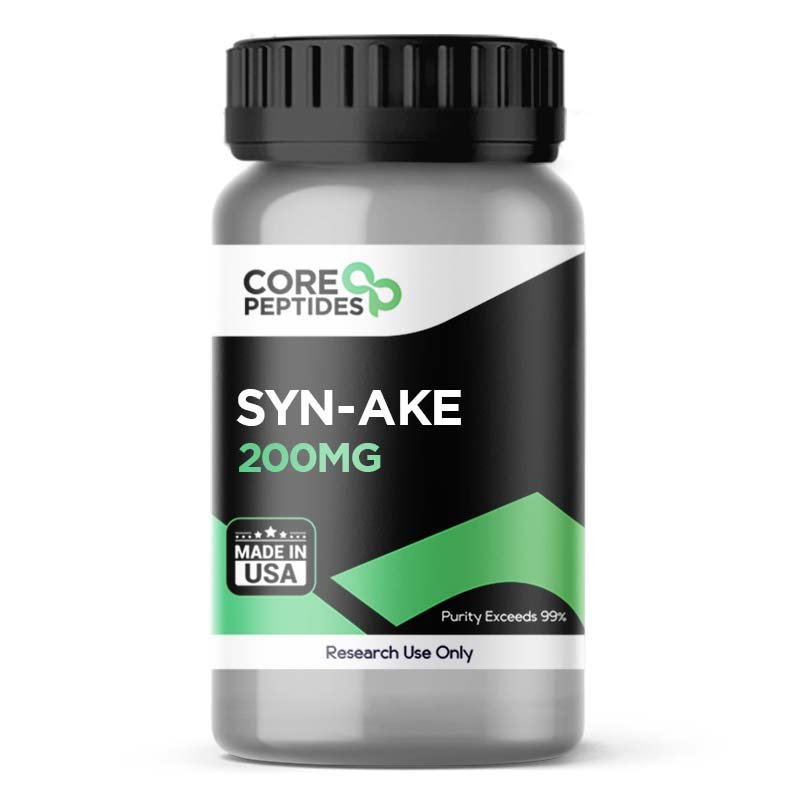
Syn-AKE (200mg) Peptide
Syn-AKE (200mg) is a synthetic tripeptide widely researched for its potential interaction with neuromuscular signaling pathways associated with muscle contraction and skin topography. Designed to mimic the activity of Waglerin-1, a naturally occurring polypeptide, Syn-AKE has become a prominent subject in cosmetic science, dermatological research, and peptide chemistry.
At Core Peptide USA, Syn-AKE (200mg) is supplied strictly for research and laboratory use only, meeting high standards of purity and consistency for U.S.-based research environments.
Overview of Syn-AKE (200mg)
Syn-AKE—also known as Tripeptide-3—is composed of three amino acids: alanine, proline, and diamino butyrate, linked via peptide bonds. Its full chemical sequence is described as beta-alanyl-L-prolyl-3-aminomethyl-L-alanine benzyl amide acetic acid.
This peptide was engineered to emulate the muscle-relaxing activity of Waglerin-1, a 22-amino-acid polypeptide originally isolated from snake venom. Waglerin-1 is known for its ability to interfere with neuromuscular signaling by blocking acetylcholine activity at the neuromuscular junction.
Researchers aimed to replicate this effect in a shorter, more stable synthetic peptide, resulting in the development of Syn-AKE (200mg) for controlled experimental study.
Mechanism of Action
The scientific interest surrounding Syn-AKE (200mg) centers on its interaction with nicotinic acetylcholine receptors (nAChRs) at the neuromuscular junction.
Under normal physiological conditions, acetylcholine binds to nAChRs, transmitting signals from nerve cells to muscle cells and initiating muscle contraction. Waglerin-1 is known to block these receptors, preventing acetylcholine from binding and thereby inhibiting muscle contraction.
Research suggests that Syn-AKE mimics this action by:
-
Targeting the same nAChR binding region
-
Reducing the frequency of muscle cell contractions
-
Temporarily relaxing muscle fibers
Experimental findings indicate that Syn-AKE may reduce innervated muscle cell contractions by up to 82% within a short time frame following exposure. Importantly, unlike Waglerin-1, Syn-AKE does not appear to interact with GABA receptors in the brain, suggesting a more selective neuromuscular focus in research models.
Additionally, studies suggest that the antagonistic action of Syn-AKE on nAChRs may be reversible, meaning receptor activity can return to baseline once the peptide is no longer present.
Chemical Makeup
Molecular Formula:
C₂₃H₃₇N₅O₇
Molecular Weight:
495.57 g/mol
Other Known Titles:
-
Tripeptide-3
-
Syn-Ake acetate
-
SYN-AK
-
DTXSID40231699
-
EX-A3743
These properties make Syn-AKE (200mg) suitable for formulation stability testing, receptor binding studies, and peptide interaction research.
Syn-AKE Peptide and Muscle Relaxation Research
Research into Syn-AKE has largely focused on its ability to temporarily inhibit muscle contractions, particularly in facial muscles associated with expression lines.
By reducing acetylcholine-induced signaling, Syn-AKE may help researchers better understand how neuromuscular relaxation influences skin surface dynamics. This mechanism has drawn comparisons to botulinum-like activity, although Syn-AKE does not act as a neurotoxin and is studied strictly within controlled laboratory models.
Its relatively small molecular size and reported skin permeability have further increased interest in Syn-AKE for topical and transdermal research applications.
Syn-AKE (200mg) and Fine Lines & Wrinkle Studies
Multiple studies have evaluated Syn-AKE’s potential effects on fine lines and wrinkles in experimental skin models.
A three-month investigation involving 37 female subjects aged 33–45 with mild-to-moderate wrinkles reported:
-
Immediate improvements in wrinkle appearance
-
Statistically significant reductions at one and three months
Another larger comparative study evaluated Syn-AKE alongside other peptides and a placebo in 45 test subjects. Researchers observed:
-
Gradual improvement over repeated exposure
-
Over 50% reduction in wrinkle size after four weeks
One widely cited finding reported up to a 52% reduction in wrinkle appearance following a 28-day application of a 4% formulation to the forehead, applied twice daily. These outcomes have made Syn-AKE (200mg) a frequently referenced peptide in cosmetic and dermatological research literature.
Safety & Selectivity Considerations in Research
Unlike Waglerin-1, which has been associated with potential neurological risks due to GABA receptor modulation, Syn-AKE was specifically designed to avoid central nervous system interaction. Early research suggests:
-
Selective activity at peripheral neuromuscular junctions
-
No significant impact on brain neurotransmitter systems
This distinction has positioned Syn-AKE as a safer analog for laboratory research, particularly in studies focused on muscle relaxation and skin aging mechanisms.
Quality & Research Standards at Core Peptide USA
At Core Peptide, all compounds—including Syn-AKE (200mg)—are provided with a commitment to:
-
Research-grade purity
-
Consistent manufacturing standards
-
Transparent labeling and documentation
Explore related peptide research categories:
For external scientific references, researchers may consult:
-
National Center for Biotechnology Information (NCBI)
-
PubMed peptide and dermatology research archives
Be the first to review “Syn-AKE (200mg)”
Related products
Peptides for sale

Peptides for sale
Peptides for sale
Peptides for sale
Peptides for sale
Peptides for sale
Peptides for sale
Peptides for sale
Reviews
There are no reviews yet.