
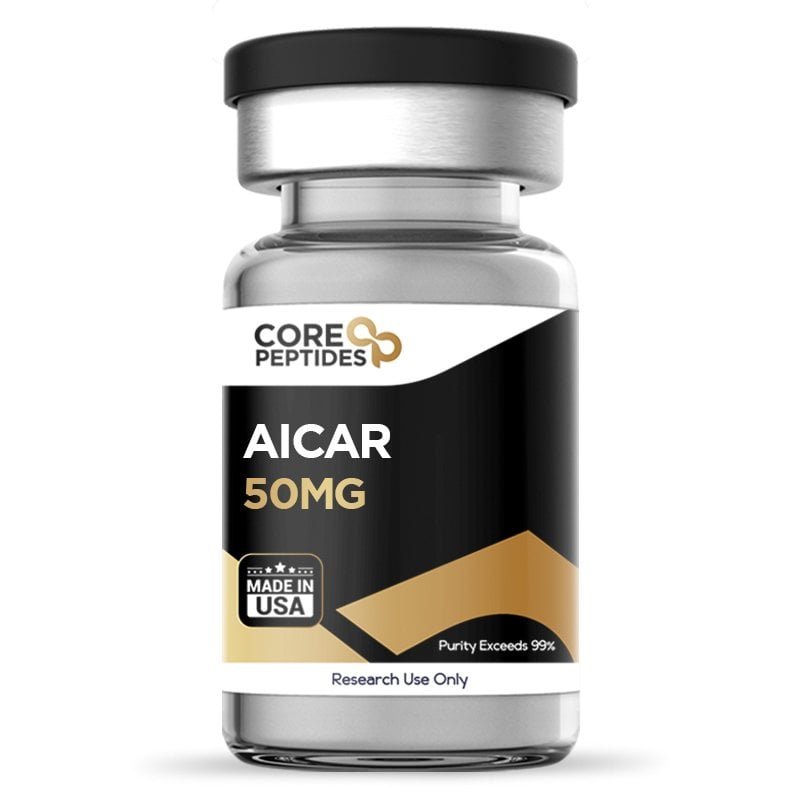
Buy AICAR (50mg)
AICAR (50mg) – Research-Grade AMPK Activator Peptide
At Core Peptide US, we provide AICAR (50mg), a lab-grade peptide widely studied for its potential to enhance cellular energy metabolism, protect tissues, improve insulin sensitivity, and support experimental research on metabolic regulation. Also known as AICA ribonucleotide, AICAR is a nucleotide analog of adenosine monophosphate (AMP) that plays a key role in activating AMP-activated protein kinase (AMPK), an enzyme essential for energy balance and metabolic control (external reference: NCBI).
Chemical Makeup of AICAR (50mg)
-
Molecular Formula: C9H15N4O8P
-
Molecular Weight: 338.21 g/mol
-
Other Names: AICA ribonucleotide
AICAR’s action primarily involves AMPK activation, which may inhibit anabolic pathways such as protein and fatty acid synthesis while promoting catabolic pathways like glucose and fatty acid breakdown. This dual action potentially increases ATP production, maintaining energy supply in cells under stress (source).
Research and Clinical Studies on AICAR (50mg)
Tissue Protection and Cardiovascular Benefits
AICAR has been studied extensively for its protective effects against ischemia-reperfusion injury. In experimental models, AICAR appeared to reduce myocardial infarction size, improve cardiac function, and decrease cardiac cell death. The mechanism is believed to involve AMPK-mediated enhancement of myocardial glucose availability and glycogenolysis, which supplies energy even under low-oxygen conditions (Cieslik et al., 2013).
Additionally, AICAR may improve tissue resistance to hypoxic stress and protect other organs, such as the liver, by reducing fatty liver progression. Studies suggest that AICAR can downregulate SREBP-1c and reduce fatty acid synthase (FAS) activity, leading to decreased triglyceride synthesis (Tomita et al., 2005).
AICAR (50mg) and Insulin Sensitivity
One of the most studied effects of AICAR (50mg) is its ability to enhance glucose uptake in skeletal muscle and improve insulin sensitivity. By activating AMPK, AICAR increases GLUT protein expression, potentially allowing cells to draw more glucose from the bloodstream. Experimental models also indicate that AICAR can reduce hepatic glucose output, stimulate fatty acid oxidation, and regulate lipid metabolism, contributing to improved metabolic balance (external link: ScienceDirect).
These properties make AICAR a valuable tool for research in metabolic disorders, diabetes, and insulin resistance studies.
Endurance and Mitochondrial Biogenesis
AICAR has shown potential in enhancing muscle endurance by activating AMPK and mitochondrial biogenesis. Increased mitochondrial function improves oxidative metabolism and energy production in muscle cells. In murine studies, AICAR administration increased running endurance by up to 44% in sedentary models, likely by stimulating the AMPK-PPARδ pathway, which regulates genes for fat metabolism and mitochondrial growth (source).
By targeting this pathway, researchers can investigate adaptations similar to endurance training without physical exercise, making AICAR a powerful tool for cellular energy research.
Anti-Inflammatory and Autophagy Effects
AMPK activation by AICAR may also influence autophagy and reduce cellular inflammation. Autophagy is a cellular cleanup process that removes damaged organelles and proteins, which is critical for maintaining cellular health. AICAR-induced AMPK activation may promote autophagy in muscle and liver cells, supporting tissue recovery and metabolic homeostasis (external link: PubMed).
These properties highlight AICAR’s potential in studying aging, metabolic disorders, and cellular stress responses.
AICAR (50mg) in Cancer and Apoptosis Research
Research indicates that AICAR may induce apoptosis in certain malignant cell lines, such as B-cell chronic lymphocytic leukemia (B-CLL). This process is associated with AMPK activation, caspase signaling, and mitochondrial pathways. Interestingly, normal B lymphocytes show similar sensitivity, suggesting selective metabolic modulation in specific cell types (study link).
This makes AICAR (50mg) a valuable peptide for researchers studying cellular metabolism, apoptosis, and cancer biology.
How AICAR (50mg) Works in Research
-
Activates AMPK: Regulates energy metabolism and enhances glucose uptake.
-
Inhibits Anabolic Pathways: Reduces protein and fatty acid synthesis under stress.
-
Promotes Catabolic Processes: Increases glucose and fat breakdown for ATP production.
-
Enhances Mitochondrial Biogenesis: Boosts energy production and endurance in muscle cells.
-
Supports Autophagy and Anti-Inflammatory Responses: Maintains cellular homeostasis.
These mechanisms make AICAR (50mg) an essential peptide for experimental research in metabolism, cardiovascular health, muscle physiology, and cancer studies.
Why Choose Core Peptide US for AICAR (50mg)
At Core Peptide US, we offer high-purity, research-grade AICAR (50mg) suitable for laboratory use. Benefits of purchasing from us include:
-
Lab-grade peptide suitable for U.S.-based research
-
Verified purity and batch consistency
-
Comprehensive product information for experimental design
-
Fast and secure domestic shipping
For additional research peptides, check our internal links to GHK-Cu peptide and other AMPK modulators.
Ordering AICAR (50mg) in the United States
AICAR (50mg) is strictly for research and laboratory purposes. Please review our Terms and Conditions before ordering. Our peptides are intended for experimental studies on cellular energy, metabolic regulation, tissue protection, and endurance research.
By purchasing from Core Peptide US, U.S. researchers can access high-quality, validated peptides with consistent purity and reliable shipping.
References & Further Reading
-
Cieslik, K. A., et al. (2013). AICAR-dependent AMPK activation improves scar formation in aged heart. Journal of Molecular and Cellular Cardiology. Link
-
Mangano, D. T. (1997). Effects of acadesine on myocardial infarction, stroke, and death following surgery. JAMA. Link
-
Longnus, S. L., et al. (2003). AICAR stimulates myocardial glycogenolysis. American Journal of Physiology.
-
Tomita, K., et al. (2005). AICAR protects against ethanol-induced hepatic steatosis. Alcoholism: Clinical and Experimental Research.
-
ScienceDirect: AICAR in metabolic research and AMPK activation. Link
-
PubMed: AMPK activation and cellular energy regulation by AICAR. Link
AICAR (50mg) is a versatile peptide for research, enabling studies on cellular energy metabolism, insulin sensitivity, tissue protection, endurance, and apoptosis. Its activation of AMPK makes it a powerful tool for metabolic and cardiovascular research, as well as muscle physiology and cancer biology
Be the first to review “AICAR (50mg)”
Related products
Peptides for sale
Peptides for sale
Peptides for sale
Peptides for sale
Peptides for sale
Peptides for sale

Peptides for sale
Peptides for sale
Reviews
There are no reviews yet.