
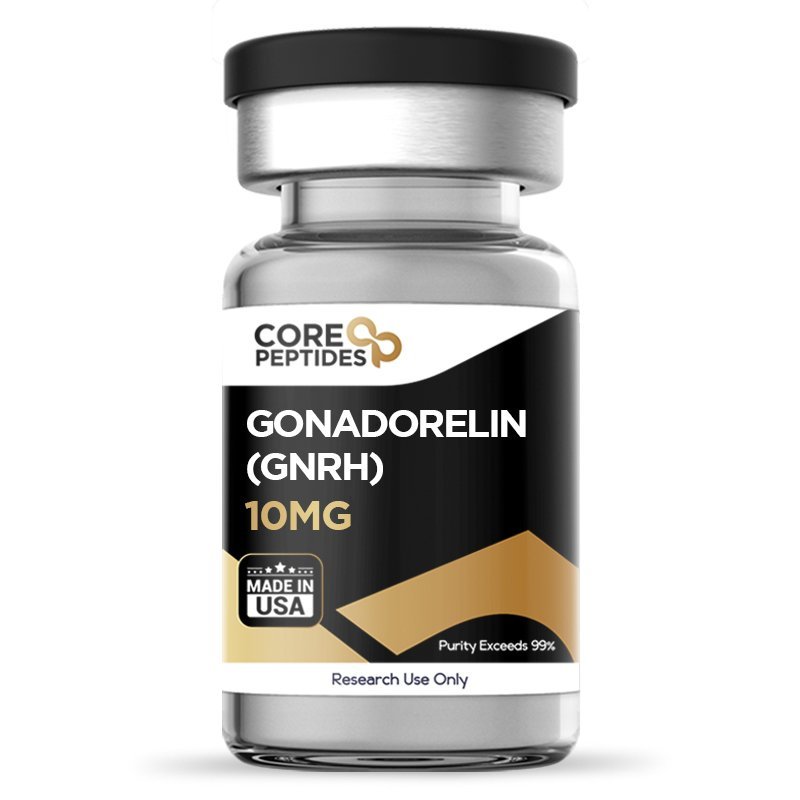

Gonadorelin (GnRH) (10mg) Peptide for Research Use | Core Peptide USA
Gonadorelin (GnRH) (10mg) is a synthetic decapeptide modeled after the naturally occurring gonadotropin-releasing hormone (GnRH), a key regulator of the hypothalamic–pituitary–gonadal (HPG) axis. At Core Peptide, we provide high-purity Gonadorelin (GnRH) (10mg) strictly for research and laboratory use across the United States.
Gonadorelin is widely studied for its ability to stimulate the release of luteinizing hormone (LH) and follicle-stimulating hormone (FSH)—two gonadotropins essential for endocrine signaling, reproductive development, and gonadal function.
Explore additional endocrine research compounds here:
Internal Link: https://corepeptide.us/peptides
What Is Gonadorelin (GnRH)?
Gonadorelin is the synthetic analog of endogenous GnRH, a hormone naturally produced by the hypothalamus. Structurally identical to native GnRH, Gonadorelin is classified by researchers as a GnRH agonist, meaning it mimics the physiological action of GnRH when interacting with GnRH receptors in the anterior pituitary gland.
This interaction stimulates pituitary cells to release LH and FSH, which subsequently act on the gonads to regulate steroid hormone synthesis, gametogenesis, and reproductive maturation.
Because of its structural fidelity, Gonadorelin (GnRH) (10mg) is a valuable research tool for studying both normal and dysregulated endocrine signaling.
Chemical Profile of Gonadorelin (GnRH) (10mg)
-
Molecular Formula: C₅₅H₇₅N₁₇O₁₃
-
Molecular Weight: 1182.31 g/mol
-
Peptide Length: 10 amino acids
-
Other Names: Gonadotropin-Releasing Hormone, GnRH
Core Peptide supplies Gonadorelin in 10mg vials, suitable for controlled laboratory research protocols.
Mechanism of Action: How Gonadorelin Works
Gonadorelin exerts its primary effects by binding to GnRH receptors (GnRHRs) located on gonadotroph cells in the anterior pituitary gland. Upon receptor activation, intracellular signaling pathways are triggered, leading to the synthesis and pulsatile release of LH and FSH.
Dual Functional Behavior
Research indicates that Gonadorelin may exhibit biphasic activity depending on exposure patterns:
-
Intermittent or pulsatile exposure may stimulate LH and FSH secretion
-
Continuous or excessive exposure may lead to GnRH receptor downregulation, resulting in reversible suppression of gonadotropin release
This dual behavior makes Gonadorelin (GnRH) (10mg) particularly valuable for investigating endocrine feedback mechanisms and receptor sensitivity.
Gonadorelin Peptide and HPG Axis Recovery
Exogenous androgen exposure is known to suppress the HPG axis through negative feedback, reducing LH and FSH secretion. Research suggests that Gonadorelin may accelerate HPG axis recovery following suppression.
In one study, models exposed to exogenous androgens exhibited severely suppressed LH and FSH levels. Short-term Gonadorelin exposure resulted in:
-
Significant increases in LH and FSH
-
Restoration of endogenous testosterone production
-
Sustained improvements lasting over 12 months without continued peptide exposure
These findings highlight Gonadorelin’s value in post-suppression endocrine research.
Gonadorelin and Testicular Function Research
Intermittent Gonadorelin administration has been studied as a means to mimic physiological GnRH pulsatility, particularly in models of hypothalamic dysfunction. Researchers reported that Gonadorelin may effectively “restart” the HPG axis by:
-
Stimulating pituitary LH and FSH secretion
-
Activating testicular androgen synthesis
-
Supporting spermatogenesis over prolonged exposure periods
Additional studies suggest Gonadorelin may assist in testicular descent and maturation, with reported success rates of approximately 40% in experimental settings.
Gonadorelin Peptide and Cancer Research
Gonadorelin and other GnRH agonists are being studied for their potential role in hormone-sensitive cancer research. Excessive exposure to mitogenic hormones such as estrogen, progesterone, and testosterone has been linked to increased cancer risk in breast and prostate tissues.
Researchers hypothesize that GnRH agonists like Gonadorelin may:
-
Reduce substrate availability for estrogen synthesis
-
Downregulate LH-mediated androgen production
-
Potentially inhibit proliferation of hormone-sensitive cancer cells
Experimental data suggests that receptor downregulation induced by sustained GnRH analog exposure may reduce testosterone and dihydrotestosterone levels—key drivers in prostate cancer models.
Gonadorelin and Spermatogenesis Studies
Clinical research has explored the effects of GnRH analogs on spermatogenesis. In one trial, male subjects exposed to a GnRH analog alongside testosterone replacement therapy experienced:
-
Up to a 93% reduction in sperm count
-
Temporary azoospermia in some subjects
Importantly, normal sperm counts returned following discontinuation, suggesting that the effects of Gonadorelin-like compounds may be reversible. This has prompted interest in Gonadorelin for temporary reproductive suppression and recovery research.
Neuroprotection and Cognitive Research
Emerging research suggests that luteinizing hormone may influence hippocampal function, potentially contributing to cognitive decline in certain contexts. By selectively modulating LH secretion, Gonadorelin may offer a tool for studying neuroendocrine interactions.
Unlike broad gonadal suppression, Gonadorelin’s selective action allows researchers to explore hormonal balance and brain function without completely inhibiting testosterone synthesis, which itself may play a protective role in cognition.
External Reference:
NCBI – Physiology of GnRH and Gonadotropin Secretion
https://www.ncbi.nlm.nih.gov/books/NBK279070/
Gonadorelin in Diagnostic Research
Gonadorelin has been used extensively in diagnostic endocrine studies. Clinical trials demonstrate that Gonadorelin can acutely elevate basal LH and FSH levels regardless of baseline hormone concentrations. This suggests its utility in assessing pituitary responsiveness and hypothalamic function, particularly in cases of amenorrhea or suspected HPG axis dysfunction.
Why Choose Core Peptide for Gonadorelin (GnRH) (10mg)?
Researchers across the United States trust Core Peptide for:
-
U.S.-based distribution and fast domestic shipping
-
High-purity, research-grade peptides
-
Transparent quality standards and documentation
-
Secure packaging and batch consistency
Please review our ordering policies:
Internal Link: https://corepeptide.us/terms-and-conditions
Be the first to review “Gonadorelin (GnRH) (10mg)”
Related products
Peptides
Peptides
Peptides
Peptides
Reviews
There are no reviews yet.